

School districts are increasingly encouraged to make challenging choices about aging facilities and essential upgrades. This means architecture firms often assess many buildings, sometimes even hundreds, turning complex facility data into practical, impactful recommendations that pave the way for a brighter future in education.
Why K-12 Architecture Firms Need Mobile Facility Assessment Tools
Many assessment teams still rely on paper forms, spreadsheets, disconnected databases, and manual reporting processes. These methods can slow projects, create inconsistencies, and make it difficult to deliver the comprehensive insights clients expect.
A mobile facility assessment platform can significantly improve the efficiency, accuracy, and value of K-12 facility assessments.

The Growing Complexity of School Facility Assessments
K-12 districts depend on architects and planners to evaluate building conditions, identify deficiencies, estimate capital needs, and help prioritize investments. A typical assessment may involve:
- Multiple school campuses
- Thousands of assets and building components
- Photographic documentation
- Facility Condition Index (FCI) calculations
- Capital Improvement Planning (CIP)
- Stakeholder reporting and presentations
Managing this information across multiple teams and projects can become overwhelming without the right technology.
Explore how mobile-first assessment workflows improve data quality and project delivery.
Challenges with Traditional Assessment Methods
Many architecture firms encounter similar obstacles during assessment projects:
Inconsistent Data Collection
When teams use different forms, spreadsheets, or processes, data quality can vary significantly between assessors. This creates additional review and validation work once field inspections are complete.
Delayed Reporting
Field notes often require manual entry and consolidation before meaningful analysis can begin. Project teams spend valuable time organizing data rather than evaluating facility needs.
Limited Visibility
Project managers may struggle to monitor assessment progress in real time when field data remains isolated on individual devices or spreadsheets.
Difficulty Scaling Large Programs
As school districts expand assessment programs across multiple campuses, manual processes become increasingly difficult to manage and maintain.
How Mobile Assessment Applications Improve K-12 Projects
Modern mobile assessment platforms streamline the entire facility assessment process.
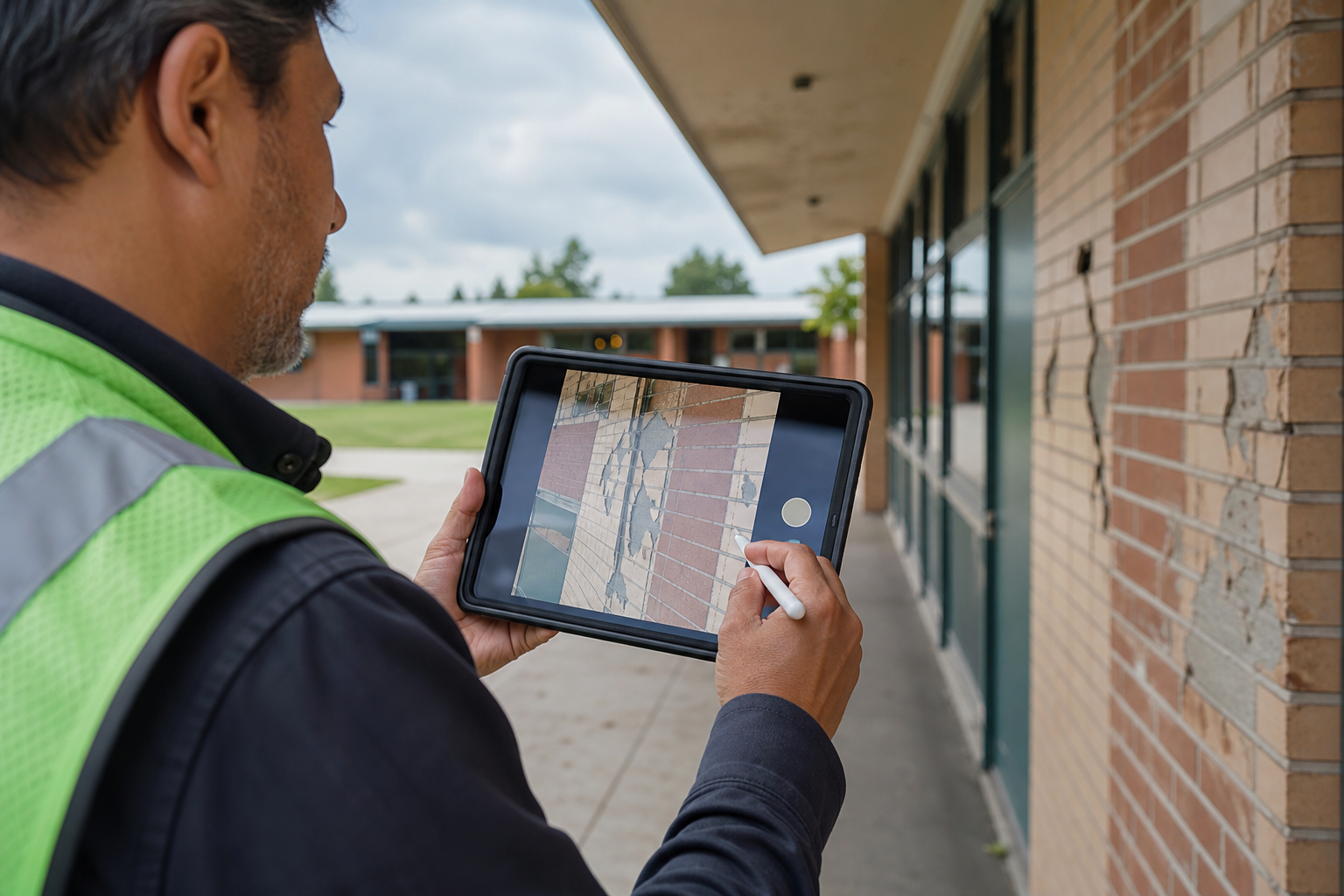 Field teams can:
- Collect data directly from mobile devices
- Capture photographs and asset information in real time
- Standardize assessment methodologies
- Synchronize data across multiple assessors
- Reduce duplicate data entry
- Improve quality assurance and consistency
The result is faster project delivery and more reliable facility data.
See how The Foundation System helps architecture firms standardize mobile facility assessments.
Turning Assessment Data into Strategic Planning
Collecting facility information is only the first step. School districts need actionable insights that help justify funding requests and prioritize investments.
 A connected assessment platform allows architecture firms to:
- Generate facility condition reports
- Calculate Facility Condition Index (FCI) metrics
- Develop capital improvement plans
- Forecast future capital needs
- Support bond planning initiatives
- Provide data-driven recommendations to district leadership
This transforms facility assessments from a compliance exercise into a strategic planning tool.
Turn field data into defensible capital plans.
Supporting Better Outcomes for School Districts
School leaders increasingly expect consultants to provide more than assessment reports. They want reliable data that helps them make informed decisions about facility investments.
 By using a mobile facility assessment platform, architecture firms can deliver:
- Faster project completion
- More accurate facility data
- Consistent assessment methodologies
- Improved stakeholder confidence
- Better long-term planning outcomes
These capabilities help firms strengthen client relationships while providing greater value throughout the lifecycle of a facility planning project.
See how Intellis connects mobile assessments to capital planning.
Modernizing K-12 Facility Assessments
As school districts continue to face aging infrastructure and growing capital needs, the demand for accurate facility condition data will only increase. Architecture firms that adopt mobile assessment technology can improve efficiency, scale assessment programs more effectively, and provide clients with the actionable insights needed to support long-term facility planning.
The Intellis Foundation System and Conditions Data Collection application helps architecture and planning firms streamline facility assessments, centralize data collection, and transform field observations into meaningful capital planning intelligence.
Ready to modernize your school facility assessments?
Schedule a demonstration to see how Intellis Foundation helps architecture firms collect, manage, and analyze facility condition data from the field to the boardroom.

FAQ: Mobile Facility Assessment Tools for K-12 Architecture Firms
What is a mobile facility assessment tool for K-12 architecture firms?
A mobile facility assessment tool helps architecture and planning teams collect building condition data in the field, document deficiencies, capture photos, and organize findings in a centralized system that supports capital planning and reporting.
Why do architecture firms need mobile assessment software for school facility projects?
K-12 assessment projects often span multiple campuses, large asset inventories, and complex reporting requirements. Mobile software helps firms standardize data collection, improve consistency among assessors, and move faster from field observations to defensible recommendations.
Can mobile facility assessment tools work without Wi-Fi?
Yes. Modern mobile assessment platforms can support offline field data collection and sync information later when a connection becomes available. That makes them practical for large campuses, older buildings, and field teams working across multiple sites.
How do mobile tools improve facility assessment accuracy?
Mobile tools improve accuracy through standardized digital checklists, validation rules, quality assurance processes, and in-app documentation, such as photos and markups. This helps reduce inconsistencies between assessors and creates more reliable condition data for analysis.
How do mobile assessments support capital planning for school districts?
They connect field data to larger planning decisions. When architecture firms capture accurate condition data in real time, they can calculate Facility Condition Index (FCI) metrics, prioritize deficiencies, model funding scenarios, and present clearer capital recommendations to district leadership and stakeholders.
What should architecture firms look for in a K-12 facility assessment platform?
Look for mobile-first data collection, offline capability, configurable assessment workflows, photo documentation, centralized condition data, quality assurance controls, reporting tools, and support for long-term capital planning. For firms managing district-wide programs, scalability across many buildings and teams is especially important.
Schedule a demo to see how The Foundation System supports mobile assessments and long-term capital planning.

Related Resources
- Condition Assessment and Capital Planning Solutions for K-12 Schools — Explore how Intellis supports school districts with condition assessment, prioritization, and long-range capital planning.
- Solutions for Architecture, Engineering, and Construction (AEC) Firms — See how Intellis helps AEC firms standardize inspections, collect mobile data, and support long-term planning across complex projects.
- How to Improve School Facility Condition Assessment — A closer look at how the Foundation System helps K-12 organizations streamline assessments, improve reporting, and support informed planning decisions.
- How to Streamline Multi-Site Building Condition Assessments — Useful for readers managing district-wide or portfolio-wide assessments across many campuses and buildings.
- Intellis Product Spotlight: FOUNDATION.Conditions — An overview of the Conditions module, including digital checklists, photo documentation, offline field capture, and QA controls.
- Facility Capital Planning Software | Intellis FOUNDATION — Learn how Foundation integrates assessment data, scenario modeling, and capital planning into a single system for clearer decision-making.
- Facility Condition Assessment for K12 Schools — Explore how implementing a software solution for Facility Condition Assessment (FCA) provides access to accurate, objective, and current FCA data so that you can expertly execute your strategic capital plan.
-
How Facility Managers Should Prepare For New School Year — Find out what K-12 facility managers should do now to prepare for the back-to-school season.
-
K12 Facilities Management and Capital Planning — Discover how software makes collecting data for condition assessments and developing strategic capital plans easier.
-
K-12 School Facility Planning — Learn how AI and Digital Twins are transforming K12 Facility Planning.