
Architecture, engineering, and construction (AEC) firms face a growing challenge: how do you turn mountains of building data into actionable plans your clients can actually use? Whether you're conducting a facility condition assessment (FCA) for a school district, a hospital campus, or a government portfolio, the path from field inspection to funded capital project is rarely straightforward.
Cloud asset lifecycle platforms are changing that. By centralizing assessment data, connecting it to capital planning workflows, and keeping information accessible from anywhere, these platforms help AEC firms move faster and deliver more value to their clients. Intellis supports AEC firms with cloud-based tools that integrate field data and capital planning into a single environment.
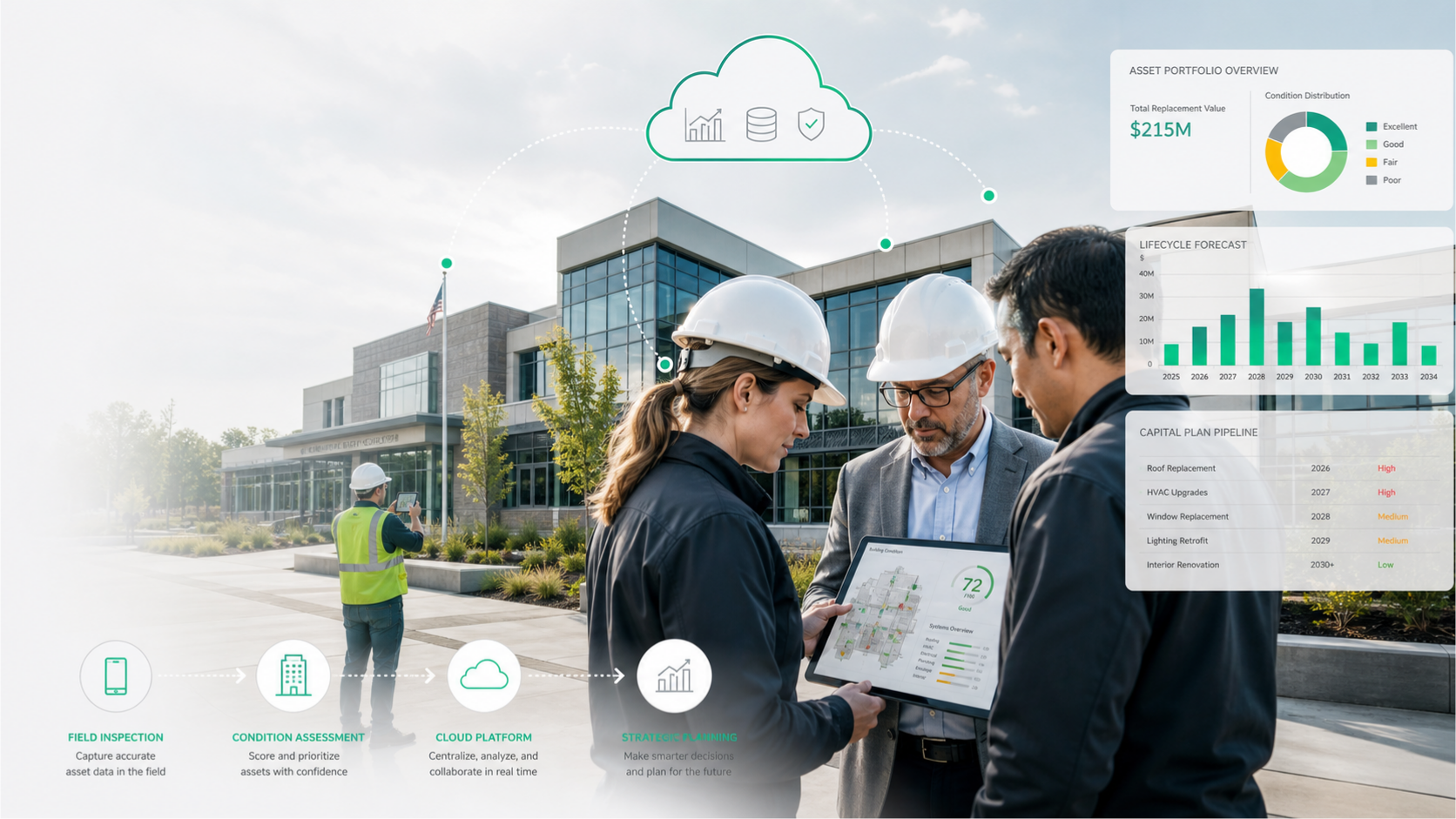
This guide explains what cloud asset lifecycle platforms do, how they support facility condition assessments, and why AEC professionals are switching from fragmented systems to centralized solutions.

Key Takeaways: How Cloud Asset Platforms Support AEC Assessments
- Cloud asset lifecycle platforms centralize assessment data, making it accessible to both field teams and stakeholders from any location.
- These platforms connect facility condition assessment results directly to capital planning and budgeting workflows.
- AEC firms can standardize data collection across projects, ensuring consistent results for clients with diverse portfolios.
- Foundation by Intellis gives AEC professionals mobile-first tools and real-time reporting to streamline assessments and planning.
- Clients benefit from living data systems that stay current beyond the original assessment, supporting long-term decision-making.
What Are Cloud Asset Lifecycle Platforms?
A cloud asset lifecycle platform is a software system that manages building and infrastructure data throughout an asset's lifespan. Instead of keeping condition assessments, maintenance records, and capital plans in separate systems, everything lives in a single cloud-based environment.
For AEC firms, this means you can collect field data on a tablet, upload it instantly, and share interactive reports with clients — all from one platform. Your team doesn't need to bounce between tools or manually transfer information between project stages.
These platforms typically include features for mobile data collection, asset inventory tracking, condition scoring, lifecycle cost projections, and capital planning. The cloud-based architecture ensures that updates made in the field appear immediately to everyone with access, whether that's your engineering team back at the office or a facilities director on the client side.
How Do Cloud Platforms Support Facility Condition Assessments?
Facility condition assessments generate a lot of data. You're documenting building systems, recording deficiencies, estimating costs, and capturing photos — often across dozens or hundreds of buildings. Cloud platforms make this process more efficient at every step.
Field Data Collection and Offline Access
Assessors can capture data directly on mobile devices, even when Wi-Fi or cellular signals are unavailable. The platform stores information locally and syncs automatically once a connection is restored. This is especially useful for large campus environments or remote sites where connectivity can be spotty.
Standardized Assessment Workflows
With configurable templates and questionnaires, cloud platforms help you standardize how your team collects data. Every assessor follows the same process, which improves consistency and reduces errors. You can also adapt workflows to meet different assessment standards, such as ASTM, APPA, or client-specific requirements.
Centralized Data Storage and Access
All assessment data lives in one place. No more hunting through folders, email attachments, or shared drives to find the latest version of a report. Everyone on your team — and your client — can access the same up-to-date information whenever they need it.
Why Is Connecting Field Data to Capital Planning So Important?
An FCA report that sits on a shelf doesn't help anyone. The real value comes when assessment findings inform decisions about what to fix, when to fix it, and how to pay for it. Cloud asset lifecycle platforms close this gap by linking assessment data directly to capital planning workflows.
When you document a failing HVAC system during an assessment, that data should feed into a prioritization model that weighs urgency, cost, risk, and strategic importance. Foundation by Intellis connects field observations to capital planning tools, helping you and your clients turn condition data into defensible project lists.
This connection matters because clients are often under pressure to justify their budget requests. Data-backed capital plans are easier to explain to school boards, city councils, and executive leadership. Your clients gain confidence, and you deliver more than just a report—you deliver a roadmap.

What Benefits Do AEC Firms Get From Using Cloud Platforms?
Cloud asset lifecycle platforms offer tangible advantages for AEC firms conducting facility assessments. Here's what you can expect.
Faster Project Delivery
Automating data collection, reducing manual data entry, and eliminating tool-switching all add up. Firms using cloud platforms often finish assessments faster without sacrificing quality. That efficiency can improve margins or free up capacity for additional projects.
Higher-Quality Deliverables
Interactive dashboards and visual reports offer clients more than a static document. They can filter by building, system type, cost, or priority. Intellis gives AEC firms access to unified dashboards that turn complex data into clear, actionable views — helping clients see exactly where to focus.
Stronger Client Relationships
When your assessment integrates with the client's ongoing facility management, you become a long-term partner instead of a one-time vendor. Living FCA data that stays current keeps you connected to the client's planning cycle, opening the door to future work.
How Do These Platforms Help Clients Make Better Decisions?
Building owners and facilities managers need more than a list of deficiencies. They need context. Cloud platforms provide them with tools to understand tradeoffs, model scenarios, and communicate their needs to stakeholders who control budgets.

Scenario Modeling and Funding Projections
What if the capital budget gets cut by 20%? What if a bond measure passes? Cloud platforms let clients run scenarios to see how different funding levels affect project timelines and deferred maintenance. This visibility helps them make smarter decisions and advocate more effectively for resources.
Real-Time Visibility Into Inspection Progress
During an assessment, clients can see progress in real time. They know which buildings have been inspected, which data has been uploaded, and where the team is at any given moment. That transparency builds trust and reduces the number of status update calls your team needs to field.
Alignment Across Stakeholders
Facilities directors, finance teams, and executives don't always speak the same language. A cloud platform turns technical condition data into dashboards and reports that different audiences can understand. When everyone looks at the same data, decisions move faster.
What Should AEC Firms Look for in a Cloud Asset Lifecycle Platform?
Not all platforms are built the same. If you're evaluating options for your firm, keep these considerations in mind.

Mobile-First Data Collection
Your assessors are in the field, not at a desk. The platform should support robust mobile data collection with offline capabilities. Look for apps that are easy to use on tablets and smartphones without requiring constant internet access.
Integration With Capital Planning Tools
The platform should connect assessment results to capital planning, prioritization, and budgeting functions. If you have to export data to another system for capital modeling, you lose the benefits of centralization.
Flexibility Across Assessment Standards
AEC firms work with clients who have different requirements. Your platform should let you configure workflows, scoring systems, and reporting formats to meet standards such as ASTM E2018, APPA FCI, HUD, or GSE guidelines without having to start from scratch each time.
Scalability for Large Portfolios
Can the platform handle a portfolio of 4,600+ sites? Can it support multiple project teams working simultaneously? If you're pursuing larger contracts, scalability matters. Intellis supports organizations with large, complex portfolios and scales to match organizational growth.
How Does Intellis Help AEC Firms With Facility Condition Assessments?
Intellis has deep roots in the AEC industry. Foundation by Intellis was designed from the beginning to meet the needs of large-scale engineering and construction organizations.
The platform offers mobile data collection, customizable inspection workflows, and real-time reporting. AEC professionals can collect data in the field with or without connectivity, standardize processes across projects, and deliver results that connect directly to capital planning. Intellis embeds AI directly into field workflows for intelligent, scalable asset inventory.
More than 20 years of experience partnering with public sector clients has shaped how Intellis approaches facility assessments. That experience shows up in the system's ability to handle complex government projects, multi-site portfolios, and demanding reporting requirements.

FAQs About How Cloud Asset Platforms Support AEC Assessments
What is a cloud asset lifecycle platform?
A cloud asset lifecycle platform is software that manages building and infrastructure data from assessment through capital planning. It centralizes condition data, maintenance history, and project priorities in one accessible system. This helps teams avoid data silos and keep information current over time.
How do cloud platforms improve facility condition assessments?
Cloud platforms streamline FCA workflows by enabling mobile data collection, standardized templates, and instant data syncing. Intellis enables assessors to collect data offline and sync it automatically, speeding up fieldwork and reducing errors. The result is more consistent, higher-quality assessments.
Can cloud platforms support different assessment standards?
Yes. Configurable workflows allow you to adapt data collection to meet ASTM, APPA, HUD, GSE, or client-specific standards. Foundation by Intellis lets you design custom inspection applications that meet each project's requirements, ensuring compliance without manual workarounds.
How does assessment data connect to capital planning?
Assessment findings flow directly into prioritization and capital planning tools on the same platform. Intellis connects field observations to scoring systems and funding scenarios, helping AEC firms and their clients turn condition data into defensible capital investment plans.
Why should AEC firms use cloud platforms instead of traditional tools?
Traditional workflows often involve multiple disconnected tools, manual data transfers, and static reports that quickly become stale. Cloud platforms centralize everything, reduce duplicate work, and keep data alive and accessible. Intellis supports AEC firms with a unified environment that handles assessment, analysis, and planning in one place.