
Budget surprises do more than disrupt capital plans. They weaken stakeholder confidence, delay critical projects, and make it harder for facilities teams to defend future funding requests.
Facility Budget Forecasting in 2026: How Cloud ALM Improves Capital Planning
That is why more organizations are rethinking how they forecast facility budgets. Instead of relying on outdated condition data, static replacement schedules, or fragmented records, they are connecting real-time asset information to multi-year capital planning through cloud asset lifecycle management (cloud ALM).
When facility condition assessments, asset data, prioritization, and capital forecasting work together, planning becomes more accurate, more transparent, and easier to defend.
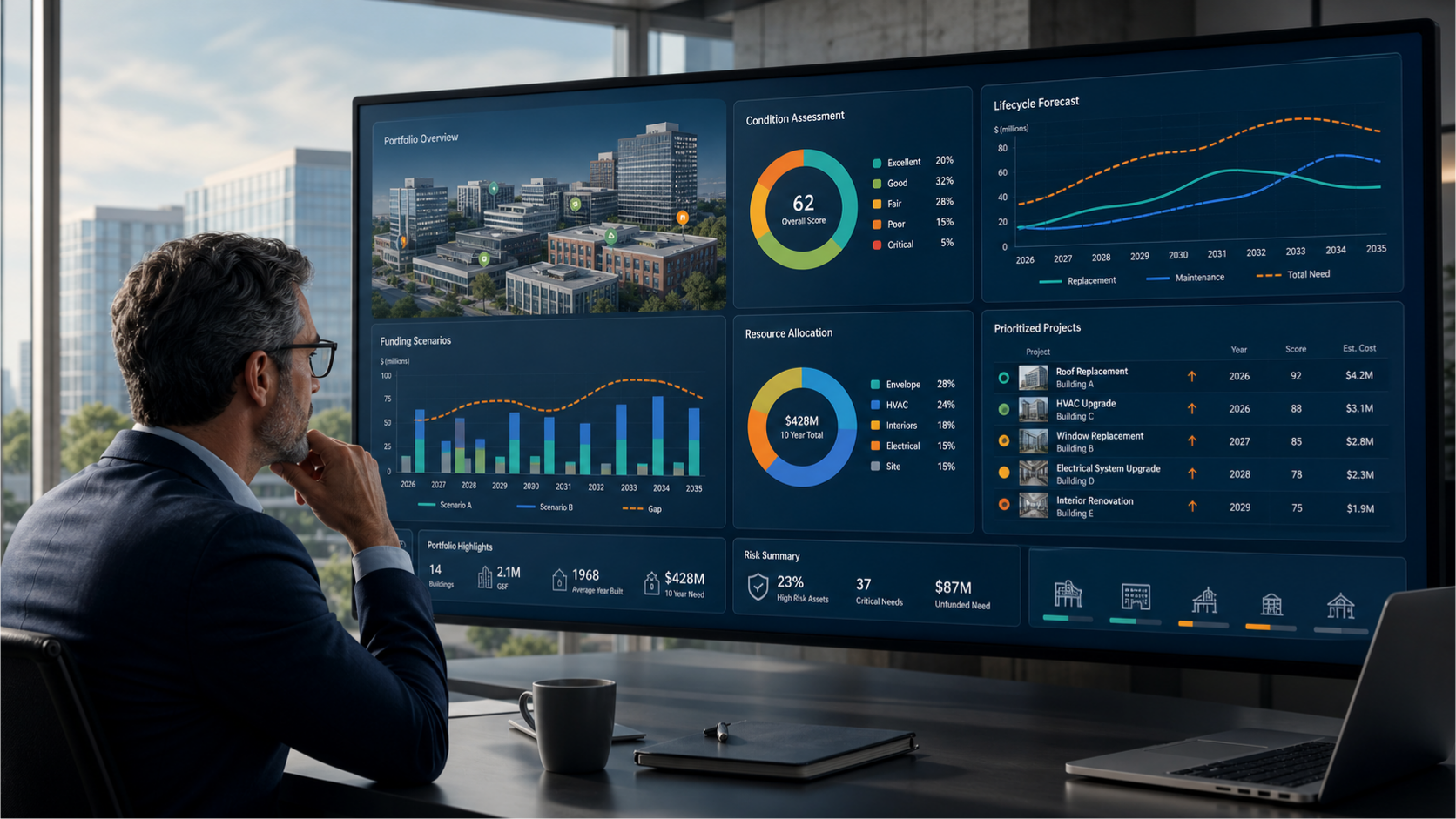 In this guide, we will walk through how facility budget forecasting works, why cloud ALM improves the process, and how Foundation by Intellis helps organizations turn condition data into long-term capital plans.

Key Takeaways
- Facility budget forecasting helps organizations estimate future capital needs using asset condition, lifecycle, and funding data.
- Cloud ALM improves forecasting by integrating field data with capital planning within a single system.
- Deferred maintenance becomes more expensive over time, making prioritization and timing critical.
- Foundation by Intellis helps teams assess facility conditions, prioritize investments, and build defensible long-term plans.
- Strong facility forecasting supports better stakeholder communication, faster decisions, and more confident funding requests.
See how Foundation by Intellis helps turn facility data into defensible capital plans.
What Is Facility Budget Forecasting?
Facility budget forecasting is the process of estimating future capital needs based on current building conditions, expected asset lifecycles, risk, and organizational priorities.
It goes beyond annual maintenance planning. A strong forecast helps answer questions like:
-
Which systems are most likely to require capital investment next?
-
Where is deferred maintenance creating the most risk?
-
Which projects should be funded first?
-
What happens if available funding changes?
The goal is simple: make better decisions before small issues become costly capital problems.
Why Traditional Budget Forecasting Falls Short
Many organizations still build capital plans around historical spending patterns and age-based replacement assumptions. That approach can miss what is actually happening in the field.
Two assets installed at the same time may age very differently depending on environment, use, maintenance history, and system performance. If planning decisions are not based on current conditions, funding requests can quickly fall out of step with reality.
That is when facilities teams end up explaining why a roof planned for replacement in year five now needs attention in year two, or why a critical HVAC asset failed much earlier than expected.
The issue is not that historical data is unhelpful. It is that it is incomplete on its own.

How Cloud Asset Lifecycle Management Improves Budget Forecasting
Cloud ALM improves facility budget forecasting by integrating condition assessments, asset data, lifecycle projections, deferred maintenance, and scenario planning into a single environment.
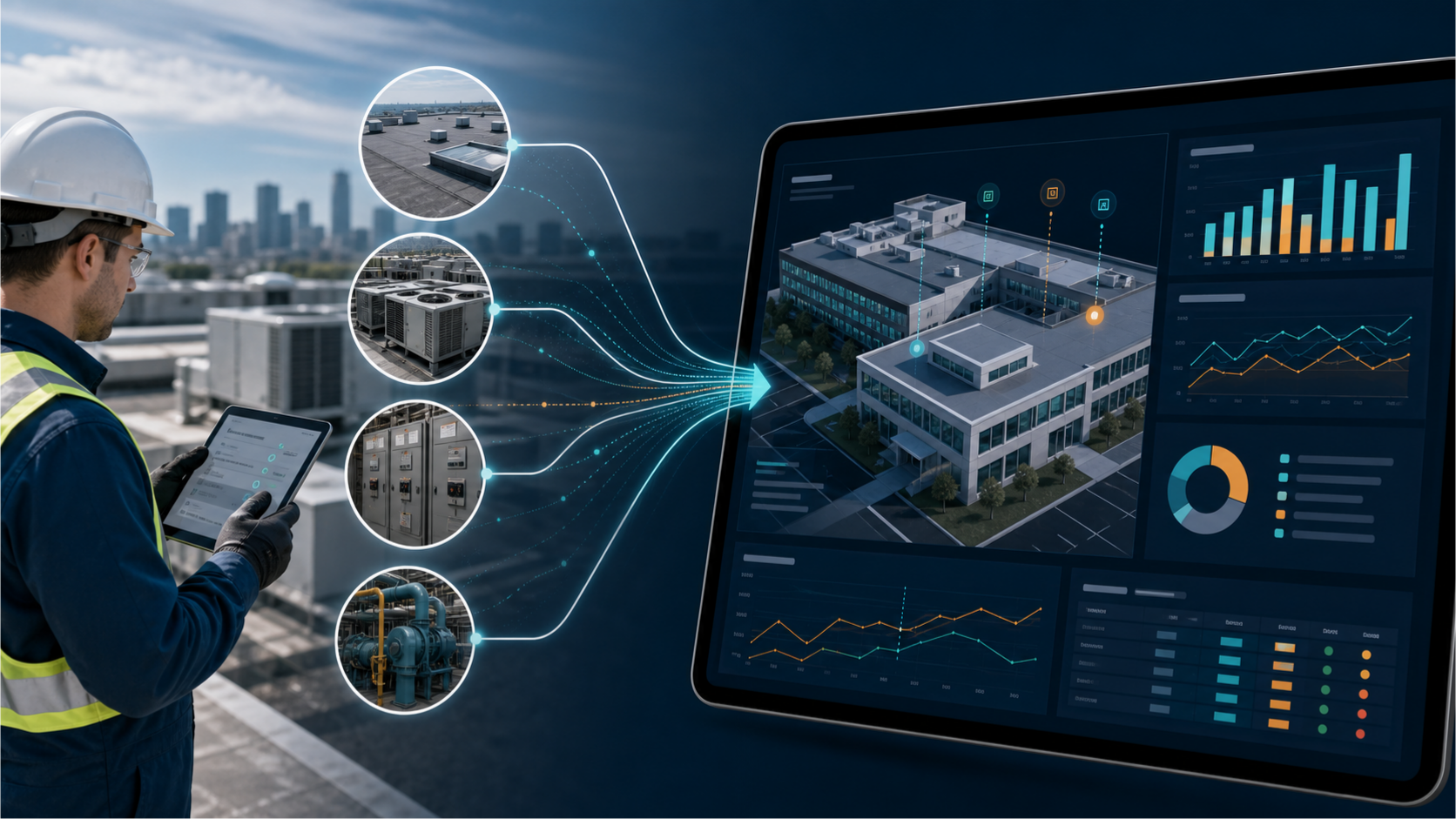 Instead of piecing together planning inputs from multiple sources, facilities leaders can work from a shared system of record that stays up to date as inspections and conditions change.
This gives teams a clearer view of:
- current asset condition
- projected replacement timing
- deferred maintenance backlog
- project priority
- funding scenarios
- portfolio-wide capital needs
That visibility makes capital planning more reliable and more actionable.
See What Clearer Capital Planning Looks Like
Foundation by Intellis helps facilities teams connect condition assessments, deferred maintenance, prioritization, and funding scenarios in one place. If you are looking for a clearer way to plan and defend capital investments, this is a strong place to start.

Connecting Assessments to Capital Plans
One of the biggest advantages of cloud ALM is that it connects what field teams see to what leadership needs to fund.
When an inspector identifies a deteriorating chiller, roof section, or electrical component, that information should not remain isolated in a field report. It should directly inform the capital plan.
This connection reduces planning gaps and improves stakeholder trust. Leaders can see what work is needed, why it matters, and how it fits into the broader capital strategy.
Real-Time Data Improves Decision-Making
Forecasting is only useful if the underlying data reflects current conditions.
Cloud-based systems help ensure that asset information is accessible, up to date, and aligned with the planning process. When conditions change, the capital outlook can change too. That makes it easier to adjust funding conversations before they become urgent.
Why Foundation by Intellis Matters
Foundation by Intellis helps organizations assess facility conditions, prioritize investments, and create data-driven long-term capital plans.
For facilities leaders, that matters because the challenge is rarely just collecting data. The real challenge is turning that data into decisions.
Foundation by Intellis helps bridge that gap by supporting:
- Mobile-first facility condition assessments
- Centralized asset and facility data
- Prioritization based on urgency, risk, and impact
- Scenario modeling for funding and sequencing
- Dashboards that support executive and stakeholder communication
- AI-enabled insights that help teams identify issues earlier and plan with more confidence
The result is a more connected workflow from field collection to boardroom-ready capital planning.
Turn Facility Data Into Defensible Capital Plans
Foundation by Intellis helps organizations assess facility conditions, prioritize investments, and build data-driven long-term plans. See how it works in practice.
The Five Stages of Asset Lifecycle Management
Understanding asset lifecycle stages is essential for better forecasting. Every facility asset moves through a predictable progression, and each stage affects capital planning differently.
1. Planning and Acquisition
Good planning starts before installation. Organizations define expected service life, replacement cost, maintenance needs, and asset importance.
These early decisions shape long-term cost and performance.
2. Deployment and Documentation
Once an asset is installed, accurate documentation becomes critical. Installation dates, baseline conditions, warranty details, and location data all support future planning.
Without strong documentation, long-term forecasting becomes less reliable.
3. Operational Monitoring and Maintenance
As assets age, inspection and maintenance data begin to reveal how they perform under real-world conditions.
This is where cloud ALM becomes especially valuable. It helps teams track how conditions change over time rather than relying solely on age-based assumptions.
4. Performance Optimization and Life Extension
Not every aging asset needs immediate replacement. In some cases, targeted upgrades or strategic repairs can extend useful life and improve performance.
The key is knowing where repair still makes sense and where replacement is the better long-term decision.
5. End-of-Life Planning and Replacement
Eventually, every asset reaches a point where replacement is the smarter path.
Organizations that can identify those moments early are in a much stronger position to forecast funding, reduce disruption, and avoid emergency projects.
Want to see how Foundation by Intellis connects condition data, prioritization, and scenario modeling in one platform?
Why Deferred Maintenance Backlogs Grow
Deferred maintenance increases when organizations delay necessary work due to budget pressure, competing priorities, or limited visibility into what matters most.
Over time, this creates a compounding problem. Costs rise, asset conditions worsen, and the backlog becomes harder to manage.
A small issue deferred today can become a major capital expense later. That is why backlog reduction is not only an operational priority. It is also a budgeting priority.
The Cost of Delay
When maintenance is postponed, the repair itself is not the only cost that increases. Delay can also lead to:
- additional asset damage
- emergency response costs
- operational disruption
- occupant comfort issues
- faster decline in portfolio condition
- reduced confidence in future capital forecasts
The longer teams wait without a clear prioritization model, the harder the recovery becomes.
How to Reduce Deferred Maintenance With Cloud ALM
Reducing deferred maintenance starts with clear visibility.
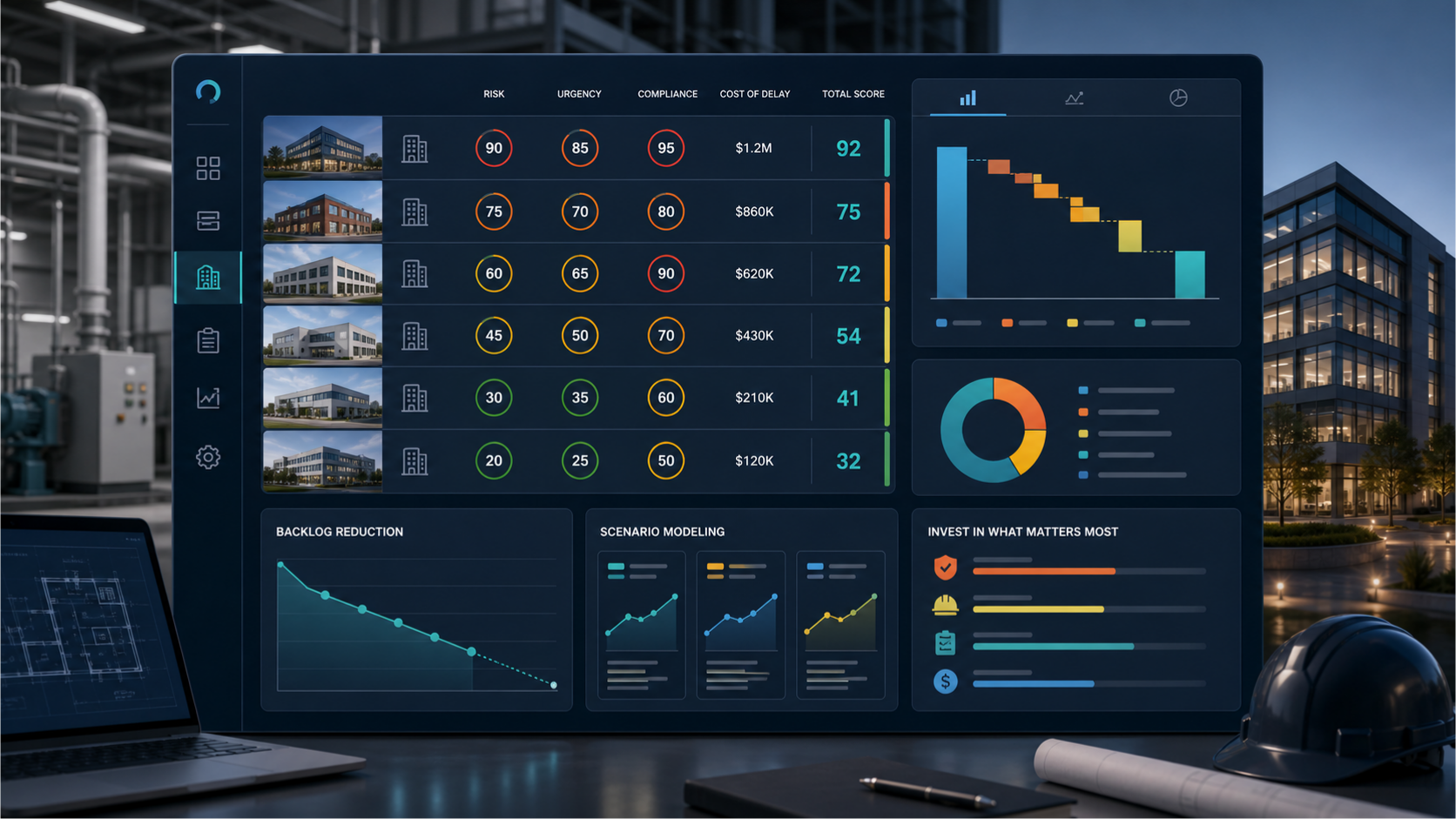 Organizations need to know:
- What work has been deferred
- Where it is located
- What risk does it create
- How costs may change over time
- Which items should be addressed first
Cloud ALM supports this process by helping teams quantify backlog, score priorities, and model different paths forward.
Prioritize by Risk and Impact
Not every deferred task should be treated the same way.
A stronger prioritization model considers:
- life safety
- compliance risk
- operational impact
- asset criticality
- cost of delay
- strategic importance
This makes the backlog easier to manage and gives leadership a more defensible basis for funding decisions.
Model Different Funding Scenarios
One of the most useful capabilities in capital planning is scenario modeling.
Instead of presenting a single fixed plan, facilities leaders can show what happens at different funding levels. That gives executives, boards, and finance teams a clearer view of tradeoffs.
Foundation by Intellis helps organizations model these paths to evaluate how timing and funding decisions affect backlog reduction over time.
Step-by-Step Guide to Facility Budget Forecasting With Cloud ALM
A strong facility budget forecast usually follows a clear sequence.
Step 1: Conduct a Baseline Facility Condition Assessment
Start with current conditions across the portfolio. Capture standardized data about buildings, systems, and deficiencies.
This baseline is the starting point for all planning.
Step 2: Quantify Deferred Maintenance
Calculate the current backlog by category, building, system, and priority level.
This gives teams a clear understanding of current exposure.
Step 3: Build Lifecycle Projections
Map expected service life and replacement timing for major assets, then refine those projections using real condition data.
Step 4: Prioritize Capital Needs
Rank projects using risk, urgency, compliance, and operational impact.
This is where planning shifts from inventory to decision-making.
Step 5: Model Funding Scenarios
Evaluate multiple funding paths to understand what can be completed, delayed, or accelerated.
Step 6: Present a Defensible Capital Plan
Turn the data into a clear capital planning narrative supported by visuals, priorities, and timing.
That is what gives stakeholders confidence.
Ready to Plan Ahead With More Confidence?
When capital planning is built on current facility data, teams can prioritize more clearly, communicate more effectively, and defend investment decisions with greater confidence. Foundation by Intellis helps make that possible.

What Is the Facility Condition Index?
The Facility Condition Index, or FCI, is a standard measure of a building's or portfolio's condition. It is calculated by dividing deferred maintenance costs by the current replacement value. In simple terms, FCI helps answer this question: how large is the backlog relative to the asset's value?
Facilities teams use FCI to:
- Compare buildings across a portfolio
- Identify properties in declining condition
- Support budget allocation decisions
- Track portfolio health over time
FCI is especially helpful when combined with asset criticality, risk, and capital forecasting.
How Different Sectors Use Cloud ALM for Capital Planning
Foundation by Intellis serves organizations that need clear, defensible facility planning, especially in sectors with aging assets, public accountability, or complex approval processes.
While the core planning challenge is similar across industries, the stakes and decision-making context vary.
K-12 school districts
School districts often need to explain capital needs clearly to superintendents, school boards, and communities. Better condition data and project prioritization help build trust in those requests.
Higher education
Colleges and universities manage diverse building types, long asset histories, and competing institutional priorities. Capital planning needs to align facility needs with the broader campus strategy.
Government facilities
Government teams often operate under formal approval cycles, compliance requirements, and public accountability. Strong documentation and transparent prioritization are essential.
AEC and Consulting Teams
AEC firms supporting assessments and capital planning need tools that standardize data collection and make it easier to translate findings into long-term recommendations.
Common Mistakes in Facility Budget Forecasting
Even experienced teams can weaken a capital plan if the process omits key inputs.
Relying too heavily on age-based replacement schedules
Asset age matters, but condition and performance matter too. The strongest forecasts account for both.
Treating all backlog items as equal
Rank projects by risk, impact, and timing, not just list them.
Presenting only one funding path
Scenario planning helps stakeholders understand tradeoffs and make better decisions.
Separating field data from capital planning
If inspections and planning live in different systems or workflows, it becomes much harder to build a clear, defensible capital plan.
What to Look for in Facility Capital Planning Software
If you are evaluating software, look beyond data collection alone.
The strongest platforms help you move from assessment to action.
Prioritize capabilities such as:
- mobile assessment workflows
- offline field capture
- centralized facility and asset data
- deferred maintenance tracking
- prioritization frameworks
- funding scenario modeling
- stakeholder-ready dashboards
- integration support
- AI-enabled planning insight, which adds clarity
Foundation by Intellis is designed around those needs, helping organizations connect facility condition data to long-term capital decisions.
Building Stakeholder Confidence Through Transparency
Capital plan approval depends on stakeholder confidence that funding requests are justified, correctly prioritized, and likely to achieve the intended outcomes.
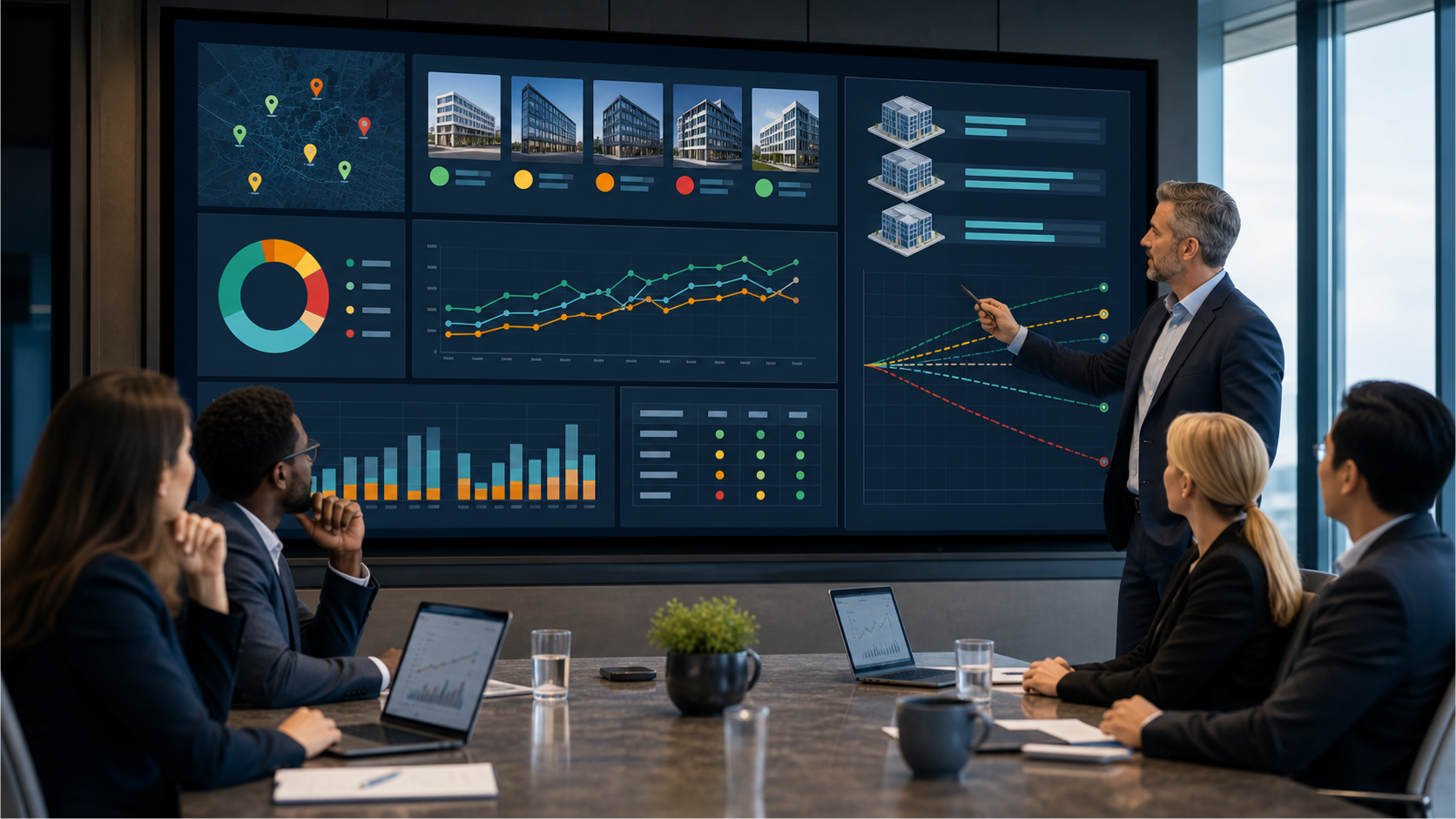 Cloud ALM platforms create the transparency that builds this confidence.
Visual Dashboards for Executive Communication
Executives don't need spreadsheets with thousands of line items. They need visual summaries showing portfolio condition, funding needs, and the consequences of different investment levels. Cloud ALM dashboards deliver this perspective.
Interactive dashboards let stakeholders explore data at their preferred level of detail. Those who want high-level summaries get them; those who want to drill into specific buildings can do that too.
Audit-Ready Documentation
Capital planning decisions should be defensible under scrutiny. Cloud ALM platforms maintain complete audit trails that show which data informed each recommendation, when assessments were conducted, and how priorities were determined.
This documentation protects organizations when capital decisions are questioned. You can demonstrate that priorities were set objectively based on condition data, rather than on political pressure or personal preferences.
Better Forecasts Start With Better Facility Data
Facility budget forecasting improves when organizations connect current conditions to long-term planning consistently and transparently.
Cloud ALM supports that shift by making it easier to assess assets, prioritize work, model funding scenarios, and clearly explain capital needs.
For organizations managing aging buildings, rising deferred maintenance, and greater scrutiny around capital spending, that is a meaningful advantage.
Foundation by Intellis helps facilities leaders turn condition data into defensible capital plans that support smarter decisions over time.
If your team is evaluating how to connect facility condition assessments to capital planning, see how Foundation by Intellis can help you build a clearer, more defensible path forward.
Frequently Asked Questions About Facility Budget Forecasting With Cloud ALM
What is facility budget forecasting?
Facility budget forecasting is the process of estimating future capital spending using current asset conditions, lifecycle expectations, risk, and organizational priorities.
What is cloud asset lifecycle management?
Cloud asset lifecycle management is a software-based approach to tracking facility assets, conditions, deficiencies, and lifecycle needs in a centralized system that supports ongoing planning and capital decision-making.
How does cloud ALM reduce budget surprises?
Cloud ALM helps reduce budget surprises by keeping capital planning connected to current condition data. When assets change, forecasts can be updated before issues become urgent.
What does Foundation by Intellis do?
Foundation by Intellis helps organizations assess facility conditions, prioritize investments, and build data-driven long-term capital plans.
Why is deferred maintenance so difficult to manage?
Deferred maintenance becomes difficult to manage when visibility is limited, priorities are unclear, and work is delayed until costs and risk increase.
Can facility capital planning software support stakeholder communication?
Yes. Strong capital planning software helps teams present clearer priorities, funding scenarios, and supporting data to executives, boards, and public stakeholders.
What is cloud asset lifecycle management for facilities?
Cloud asset lifecycle management is a software approach that tracks facility assets from acquisition through disposal using cloud-based platforms. These systems centralize condition data, automate lifecycle projections, and connect assessment findings directly to capital planning workflows.
Intellis Foundation exemplifies this approach by turning condition assessment data into prioritized capital recommendations that help you secure funding.
How does cloud ALM reduce budget surprises?
Cloud ALM reduces budget surprises by keeping capital forecasts connected to real-time condition data. When asset conditions change, your projections update automatically. You never present outdated numbers or defend requests based on old assessments.
This real-time connection also helps you catch deterioration early, before minor issues become expensive emergencies.
What is a Facility Condition Index, and why does it matter?
The Facility Condition Index (FCI) measures portfolio health by dividing the total deferred maintenance cost by the current replacement value. An FCI below 0.05 indicates good condition, while scores above 0.10 signal significant deferred maintenance needs.
Intellis Foundation calculates FCI automatically from your assessment data, helping you track portfolio health over time and allocate capital where it's needed most.
How long does it take to reduce a large deferred maintenance backlog?
Backlog reduction timelines depend on backlog size, available funding, and prioritization approach. Clear safety-critical items within 90 days, regardless of the overall backlog. Full clearance for mid-size portfolios typically takes eighteen to thirty-six months with sustained investment.
The key is to improve preventive maintenance at the same time, so you're not adding new deferrals faster than you're clearing old ones.
Can cloud ALM integrate with existing facility management systems?
Yes, modern cloud ALM platforms integrate with CMMS, FM, and EAM systems through APIs and data connectors. This integration creates unified visibility without requiring you to abandon existing tools.
Intellis Foundation fills the gap between operational systems and strategic capital planning, connecting daily maintenance data to long-term investment decisions.
How does AI improve facility budget forecasting?
AI analyzes historical patterns and current conditions to predict future asset performance and maintenance needs. These predictions help you anticipate failures and budget proactively rather than reactively.
Intellis embeds AI insights directly into capital planning workflows, flagging assets that need attention and helping you prioritize investments based on risk and impact.
Want to see how Foundation by Intellis connects condition data, prioritization, and scenario modeling in one system?
Related Reading
Continue exploring how better facility data supports stronger capital planning decisions:
-
Understanding the Facility Condition Index (FCI) — Learn how FCI works, how to interpret scores, and how facilities teams use it to prioritize investments and justify funding.
-
Facility Capital Planning Financial Analysis — A practical guide to the financial terms, forecasting concepts, and planning skills that help facilities leaders build stronger capital plans.
-
The MBCx Firm's Guide to Facility Condition Assessments — Explore how facility condition assessments support budget clarity, risk reduction, and better long-term planning.
- Foundation Condition Assessment and Capital Planning System — See how Foundation connects facility condition data directly to capital planning, prioritization, and long-term decision-making.
-
How to Build a Capital Improvement Plan — See how facility condition data and growth planning can work together to create a more strategic capital improvement plan.
-
Facility Capital Planning Software | Intellis FOUNDATION — Learn how Foundation brings condition assessments, scenario modeling, and long-term strategy into one capital planning platform.
- Smarter Facilities Planning with Intellis — Get expert insights into data-driven approaches to managing the lifecycle of physical assets.
- Easy-to-Use Facility Condition Assessment Software — See how the Foundation Conditions module supports mobile inspections, digital checklists, and more consistent facility condition assessments.
- Intellis Software | FOUNDATION for Better Facility Capital Planning — Explore how the Needs module helps expose deficiencies, estimate costs, and support repair-versus-replacement decisions.