

Unexpected equipment failures do more than interrupt operations. They create budget pressure, increase risk, and make it harder for facilities teams to plan with confidence. That is why predictive maintenance has become a priority for many organizations.
But predictive maintenance alone is not enough.
Predictive Maintenance in Facilities Management: Why It Works Better with Data-Driven Capital Planning
To make better decisions across a portfolio, facilities leaders need more than alerts about individual assets. They need centralized facility data, clear insights into conditions, defensible capital plans, and a practical way to prioritize funding. That is where The Foundation System from Intellis stands apart.
Turning Your FCA Data Into a Capital Plan?
Download our free 5-Step Facility Capital Planning Checklist to make sure you're connecting assessment findings to the planning and prioritization decisions that come next.

Quick Answer: What is predictive maintenance, and why does capital planning matter?
Predictive maintenance uses real-time data, sensors, and predictive analytics to identify signs of equipment issues before failure occurs.
It helps reduce downtime and improve maintenance timing.
However, if your organization also needs to prioritize projects, justify budgets, manage deferred maintenance, and align facilities data with long-term strategy, then predictive maintenance should be integrated into a broader facility capital planning approach.
 The Foundation System helps organizations move from isolated asset decisions to a more strategic, data-driven model by connecting facility condition assessments, capital planning, prioritization, and Automated Reporting within a single Integrated Platform.
Why predictive maintenance matters in modern facilities management
Facilities leaders are under pressure to do more with less. Aging buildings, deferred maintenance, limited budgets, and growing accountability have changed how organizations evaluate maintenance strategy.
Predictive maintenance is valuable because it helps teams:
-
Detect issues earlier using real-time data
-
Reduce unplanned downtime
-
Improve maintenance scheduling
-
Extend asset life
-
Support more efficient resource allocation
For example, if a critical HVAC unit begins to show signs of performance decline, predictive maintenance can help a team respond sooner rather than later. That early visibility may reduce service disruption and prevent more expensive repairs.
This approach is especially relevant in environments where uptime, safety, and operational continuity matter, including K-12 districts, higher education campuses, and public sector facilities.
Where predictive maintenance fits — and where it does not go far enough
Predictive maintenance is an important part of modern facilities management, but it typically focuses on when an asset may need intervention.
Facilities leaders also need answers to broader questions:
- Which buildings or systems represent the highest capital risk?
- Where is deferred maintenance growing fastest?
- Which projects should be funded first?
- How do you justify spending decisions to finance leaders, executives, or boards?
- How do you turn assessment data into long-term, defensible investment plans?
Without a system that connects asset condition data to planning and prioritization, organizations can still struggle with fragmented decisions, stakeholder misalignment, and incomplete visibility across their portfolio.
That is why predictive maintenance works best when it is part of a larger Data-Driven, Cloud-Based facilities strategy.
Predictive maintenance vs. facility capital planning
Predictive maintenance and capital planning are closely related, but they serve different purposes.
Predictive maintenance helps you:
- Anticipate equipment issues before failure
- Improve maintenance timing
- Reduce unexpected interruptions
- Support short- to mid-term operational decisions
Facility capital planning helps you:
- Assess building and asset conditions across a portfolio
- Prioritize investments based on risk, urgency, and impact
- Track deferred maintenance
- Build long-term funding scenarios
- Create Defensible Capital Plans for leadership and stakeholders
The strongest organizations do not treat these as separate efforts. They connect operational insights with long-range planning so maintenance, renewal, and capital investment decisions work together.
Why The Foundation System is a smarter strategic fit
The Foundation System from Intellis is not positioned as a standalone predictive maintenance tool. It is a capital planning platform designed to help organizations assess facility conditions, prioritize investments, and build long-term plans with confidence.

That distinction matters.
Instead of focusing only on equipment alerts, The Foundation System helps facilities leaders create a broader decision-making framework built on Centralized Data, Actionable Insights, and clear portfolio visibility.
With the Foundation System, organizations can:
- Centralize facility condition data in one Secure, Scalable environment
- Support Facility Condition Assessment Software workflows
- Connect assessment findings to capital planning decisions
- Improve prioritization across projects, buildings, and systems
- Surface deferred maintenance more clearly
- Provide dashboards and Automated Reporting for stakeholder alignment
- Build long-term, data-backed plans that help justify funding decisions
In practical terms, that means teams can move beyond isolated maintenance events and make smarter portfolio-wide decisions about repair, renewal, and capital investment.
How the Foundation System supports better facilities decisions
When facilities data is fragmented, it becomes difficult to act with confidence. Teams may know something needs attention, but not how that issue compares to other priorities across the organization.
The Foundation System helps close that gap by turning assessment data into strategy.
1. Centralized facility data
The Foundation System brings facility information together into a single Cloud-Based, Integrated Platform, helping teams work from a shared source of truth.
2. Better prioritization
Not every issue carries the same operational, financial, or safety impact. The Foundation System helps teams evaluate needs more consistently so they can prioritize investments with greater clarity.
3. Deferred maintenance visibility
Deferred maintenance can grow quietly until it becomes a much larger financial and operational problem. The Foundation System helps organizations identify, track, and communicate those risks more effectively.
4. Stakeholder alignment
Facilities teams, finance leaders, and executives often need the same data presented in different ways. The Foundation System supports dashboards and reporting that make complex facility data easier to understand and act on.
5. Long-term planning
Short-term decisions are important, but a sustainable facilities strategy requires a longer horizon. The Foundation System helps organizations build plans that support budgeting, forecasting, and capital improvement planning over time.
For education and public sector organizations, strategy matters even more
For school districts, colleges, universities, and government agencies, facility decisions are rarely about one asset in isolation. They affect safety, service delivery, public trust, funding approvals, and long-term stewardship.
These organizations often need to answer questions such as:
- Which buildings should be addressed first?
- What is the cost of waiting another budget cycle?
- How do current facility conditions affect long-term capital needs?
- What data will help justify funding requests?
This is why Facility Condition Assessment Software and capital planning systems play such an important role. Predictive maintenance can improve day-to-day operations, but portfolio strategy requires stronger visibility, clearer prioritization, and more defensible planning.
A more practical way to think about predictive maintenance
Predictive maintenance should not be viewed as the entire strategy. It is one input into a broader facilities intelligence model.
A more effective model looks like this:
- Capture accurate facility and asset condition data
- Organize that data in a centralized system
- Identify risk, urgency, and trends
- Prioritize projects based on impact and funding reality
- Build long-term plans that leadership can support
That is the shift from isolated maintenance activity to strategic capital planning.
And that is where Intellis helps organizations make better decisions.
Why facilities leaders are moving toward integrated planning platforms
As facilities portfolios become more complex, teams need more than disconnected tools and one-off reporting. They need systems that make data usable, visible, and actionable across the organization.
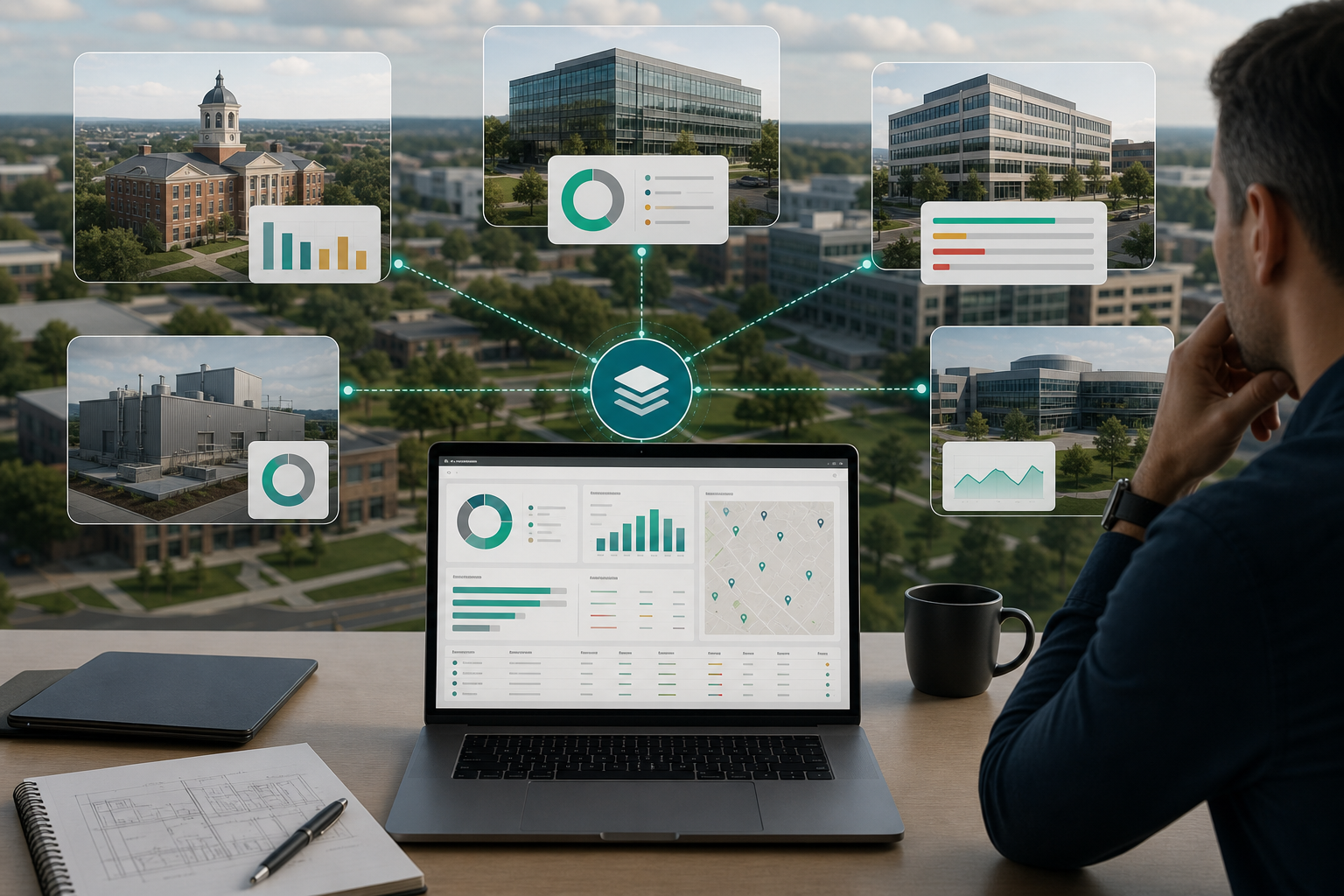 The move toward integrated planning platforms reflects a simple reality: the best facilities decisions come from connected information.
With AI-Powered workflows, Mobile-First data collection, Predictive Analytics, and an Intuitive interface, organizations can improve not only how they assess facilities, but also how they fund, plan, and communicate capital needs.
See how The Foundation System supports smarter capital planning
If your team is exploring how predictive maintenance fits into a broader facilities strategy, it may be time to look at how your data supports planning, prioritization, and long-term decision-making.
Schedule a discovery call with Intellis to see how The Foundation System can help you centralize facility data, improve prioritization, and build more confident capital plans.

Frequently Asked Questions
What is predictive maintenance in facilities management?
Predictive maintenance is a maintenance approach that uses data, sensor inputs, and performance trends to identify potential asset issues before failure occurs. It helps teams reduce downtime and improve maintenance timing.
What is the difference between predictive maintenance and preventive maintenance?
Preventive maintenance follows a fixed schedule based on time or usage. Predictive maintenance uses actual asset data and condition trends to more precisely guide the timing of interventions.
Is predictive maintenance enough for facility capital planning?
No. Predictive maintenance can improve operational decision-making, but capital planning also requires facility condition data, project prioritization, visibility into deferred maintenance, funding scenarios, and stakeholder reporting.
How does capital planning software support facilities teams?
Capital planning software helps organizations assess conditions, prioritize investments, track deferred maintenance, and create long-term, data-driven plans that support budgeting and executive decision-making.
What is The Foundation System from Intellis?
The Foundation System is a capital planning platform from Intellis that helps organizations assess facility conditions, prioritize projects, centralize data, and build defensible long-term plans.
Who benefits most from The Foundation System?
Facilities leaders, capital planning teams, operations leaders, school districts, higher education institutions, government agencies, and organizations managing large or complex building portfolios can all benefit.
How can better facility data improve funding decisions?
Better facility data helps teams quantify need, compare priorities, communicate risk more clearly, and create defensible capital plans that are easier for leadership and stakeholders to understand and support.

Related Resources
Continue exploring facility capital planning, condition assessments, and connected facilities data with these Intellis resources:
-
Harnessing AI for Smarter Capital Planning & Facility Assessments — A strong next read for teams exploring how AI, Predictive Analytics, and high-quality facility data support smarter capital planning and facility assessments.
-
How to Connect CMMS, FM, and PM Data to Build Smarter Long-Term Capital Plans — Useful for readers who want to connect maintenance, operations, and project data to build more defensible long-term capital plans.
-
How Property Condition Assessment Software Turns Data Into Capital Plans — A helpful follow-up for readers interested in how facility condition assessment data can move beyond static reports and support prioritization, funding, and long-term planning.
-
How Strategic Capital Planning Drives Impact — A broader strategic resource focused on how data-driven capital planning improves budgeting, prioritization, and long-term facility outcomes.
-
Enhancing Smart Infrastructure Projects: The Role of Foundation System — A relevant read for public sector and infrastructure audiences looking at how Real-Time Data, IoT, and capital planning work together in more connected environments.
- FM Industry — Discover the most impactful trends shaping the facility management industry right now.