

Discover how facility managers are shifting from costly emergency repairs to data-driven capital planning that extends asset life and secures funding.
From Emergency Repairs to Defensible Capital Plans
Facility capital planning becomes difficult when decisions are driven by urgent failures instead of reliable condition data. When teams lack clear visibility into asset condition, replacement timing, and portfolio-wide risk, planning becomes harder to defend, and funding becomes harder to secure.
The organizations that plan well are not simply better at budgeting. They are better at turning facility condition data into clear priorities, actionable insights, and defensible capital plans.
See how facilities teams build clearer, more defensible capital plans with Foundation.
Foundation helps you assess conditions, prioritize investments, model scenarios, and communicate decisions with data stakeholders can trust.
Why emergency-driven facilities decisions cost more
Most facilities leaders know the pattern. A boiler fails during winter. A roof leak disrupts operations. An aging HVAC unit finally reaches the point where repairs are no longer enough. The team has to move quickly, locate funding, manage procurement, and explain why the expense was not anticipated.
The cost is not limited to the repair itself. Emergency work often carries higher labor and procurement costs, tighter timelines, and fewer options. It also pulls facilities teams away from long-term planning. Over time, this creates a cycle where urgent work keeps replacing strategic work.
Just as important, it affects confidence. When funding requests repeatedly follow unplanned failures, finance teams and executive stakeholders may start to see facilities spending as unpredictable rather than strategic.
Build a more confident capital planning process with Foundation by Intellis.
If your team needs better visibility into facility conditions, clearer prioritization, and stronger budget justification, Foundation gives you the centralized data and planning tools to move forward with confidence.
Why capital plans need more than experience alone
Experience matters. Institutional knowledge matters. But when capital requests reach finance leaders, superintendents, boards, or executives, experience alone is rarely enough.
Decision-makers want to understand:
- What needs attention first
- Why those assets are the priority
- What happens if work is delayed
- How costs were estimated
- How the plan supports broader organizational goals
Without a consistent method for assessing conditions and ranking needs, even a well-informed plan can look subjective. And when a plan feels subjective, it becomes easier to question, postpone, or reduce.
The strongest capital plans are built on evidence. They connect facility condition assessments, risk, cost, and timing in a way that stakeholders can understand and trust.
Looking for a more practical way to improve capital planning?
See how Foundation connects facility condition assessments, scenario modeling, and automated reporting in one integrated platform.

What gets in the way of better facility capital planning
In many organizations, facility data lives in too many places. Work order history may sit in one system. Building information may be spread across files or reports. Asset age, condition, and replacement cost may depend on staff knowledge rather than standardized records.
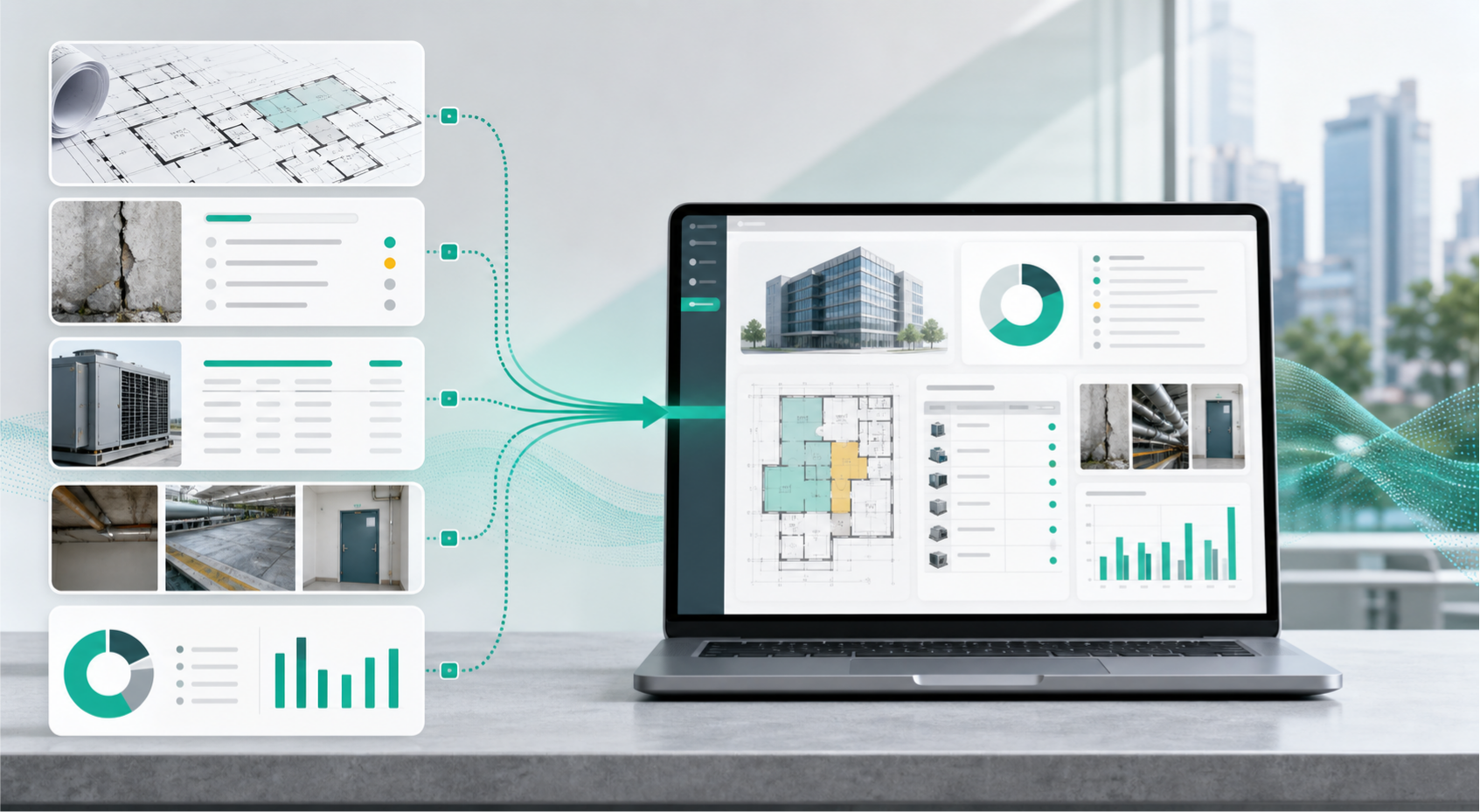 This fragmentation makes capital planning harder in several ways:
- Condition data may be incomplete or outdated
- Priorities may vary from one assessor or team to another
- Portfolio-wide trends are difficult to spot
- Scenario planning takes too much manual effort
- Stakeholders may be working from different versions of the data
When the data is inconsistent, the plan becomes harder to defend.
What a defensible capital plan actually requires
A defensible capital plan is not just a list of projects. It is a structured, data-driven process that shows how priorities were determined.
That usually requires five things:
1. Standardized facility condition assessments
Teams need a consistent way to evaluate assets and building systems across the portfolio.
2. Centralized data
Condition, cost, lifecycle, and asset information should live in one integrated platform so teams can work from the same source.
3. Clear prioritization criteria
Projects should be ranked using defined factors such as risk, urgency, cost, compliance, operational impact, and funding constraints.
4. Scenario modeling
Leadership needs to see how things change under different budget levels, including what can be addressed now and what may need to wait.
5. Reporting that supports decision-making
Capital planning outputs should be understandable to facilities leaders, finance teams, and executive stakeholders alike.
When these elements are in place, capital planning becomes more than an annual exercise. It becomes an ongoing strategy.
Want a closer look at how data-driven capital planning works in practice?
Explore how Foundation helps facilities leaders turn condition assessments into actionable insights, funding priorities, and long-term plans.

How Foundation by Intellis supports better planning
Foundation by Intellis is a capital planning platform designed to help organizations assess facility conditions, prioritize investments, and build long-term plans with greater clarity.
Instead of relying on scattered information and inconsistent workflows, teams can use Foundation to create a more structured planning process.
With Foundation, organizations can:
- Standardize facility condition assessments across sites and teams
- Capture real-time data in the field with mobile-first workflows, even without Wi‑Fi
- Centralize condition and asset data in one integrated platform
- Prioritize projects using data-driven scoring and decision criteria
- Model funding scenarios to support long-term planning
- Share automated reporting and dashboards that help stakeholders understand the plan
The result is not just better organization. It is better decision-making.
Turning condition data into investment priorities
Collecting facility data is only the first step. The larger challenge is deciding what to do first.
 For example, should a team address an aging roof, a failing boiler, or site infrastructure that is creating operational risk? Each issue may matter, but not every issue carries the same urgency, cost, or long-term consequence.
Foundation helps facilities teams move from raw condition data to prioritized action. By combining facility condition assessments with scoring, planning logic, and scenario modeling, teams can identify which investments are most important now and which ones can be phased over time.
This makes capital planning easier to explain. Instead of presenting a list of needs, teams can present a method.
Why stakeholder trust matters as much as the numbers
Even a strong facilities strategy can stall if stakeholders do not understand it.
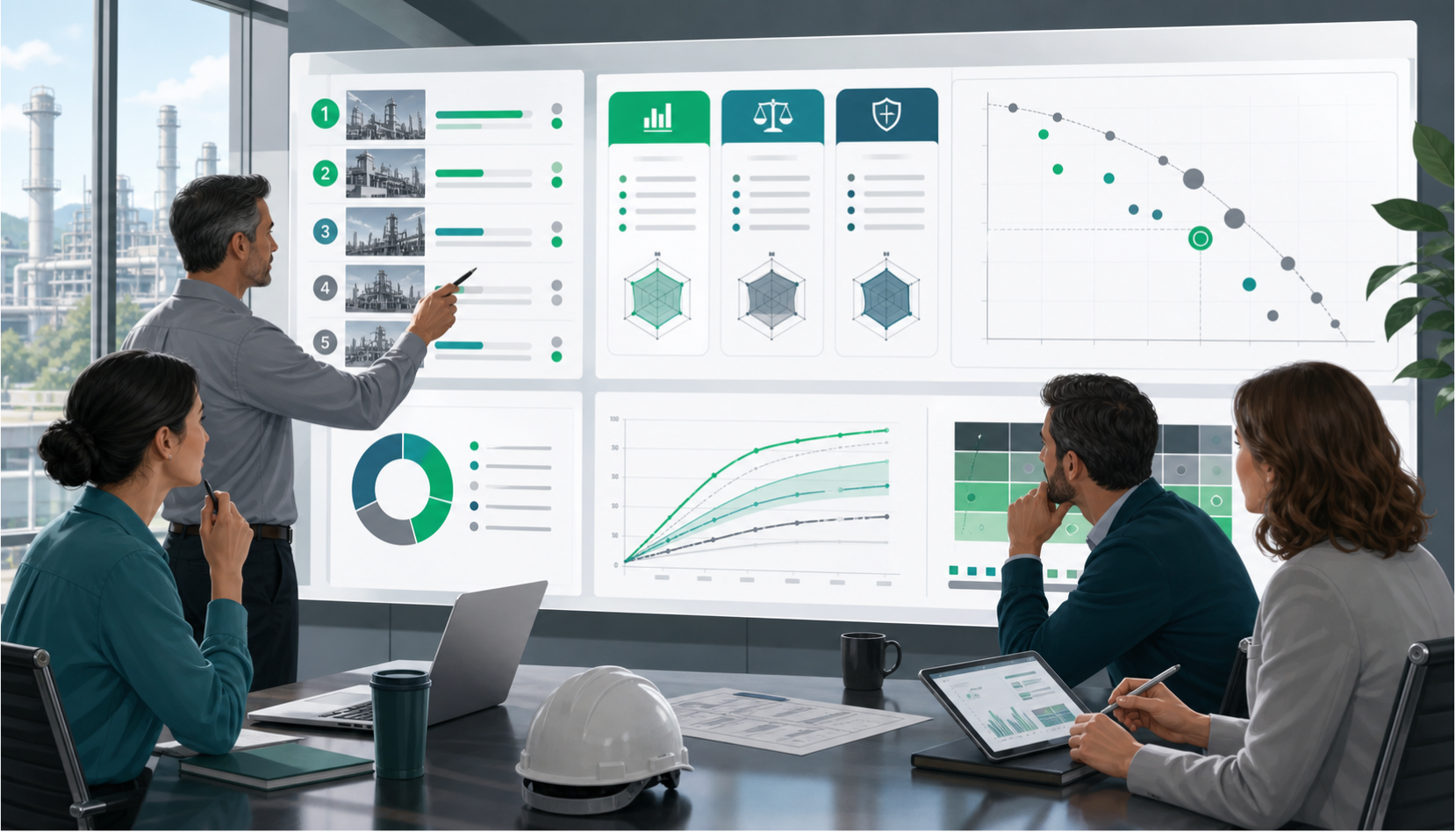 Finance leaders may focus on timing, cost, and return. Executives may want to understand organizational impact. Boards may need a broader view of risk, asset health, and future funding needs.
When each audience sees different information, alignment becomes harder. When everyone works from the same centralized data, conversations become more productive.
This is where reporting matters. Clear dashboards, visual summaries, and automated reporting help translate complex facility information into decisions. That helps stakeholders see not only what is being requested, but also why it matters.
Better plans lead to better outcomes
Organizations that improve their planning process often see more than operational efficiency. They gain stronger internal alignment, better visibility into deferred maintenance, and more confidence in long-term budgeting.
They also create a stronger case for investment.
When a capital request is backed by current condition data, consistent prioritization, and clear scenario planning, the conversation changes. Facilities leaders spend less time defending assumptions and more time guiding strategy.
That is the value of defensible capital planning. It helps organizations move from short-term disruption to long-term control.
Defensible Capital Planning Starts with Better Data
Facility capital planning works best when it is built on current data, clear priorities, and a process that stakeholders can trust. Emergency-driven decisions may always be part of facilities management, but they should not define the plan.
Foundation by Intellis helps organizations turn facility condition assessment data into actionable insights, strategic priorities, and defensible capital plans that support smarter investment decisions over time.
If your team is looking for a better way to assess conditions, prioritize needs, and communicate funding decisions with confidence, Foundation is built to support that work.

FAQs about Defensible Capital Plans
What is a defensible capital plan?
A defensible capital plan is a long-term facilities investment plan supported by clear condition data, prioritization criteria, cost logic, and documented decision-making. It helps organizations explain why projects are recommended, when they should happen, and what risks come with delay.
Why are facility condition assessments important for capital planning?
Facility condition assessments provide the baseline data needed to understand asset health, estimate future needs, and identify risk. Without them, capital planning is harder to prioritize, justify, and communicate.
How does capital planning software improve decision-making?
Capital planning software helps organizations centralize data, standardize assessments, rank priorities, model funding scenarios, and generate reporting. That makes decisions more consistent and easier to defend with stakeholders.
How does Foundation by Intellis help facilities teams?
Foundation by Intellis helps teams assess facility conditions, collect real-time field data, centralize information, prioritize investments, and support long-term planning. It gives facilities leaders a clearer, more actionable view of what needs attention and why.
Build a more confident capital planning process with Foundation by Intellis.
If your team needs better visibility into facility conditions, clearer prioritization, and stronger budget justification, Foundation gives you the centralized data and planning tools to move forward with confidence.

Related Resources
- How Property Condition Assessment Software Turns Data Into Capital Plans — See how facility condition assessment data becomes actionable, defensible capital planning inside Foundation.
- How Cloud ALM Cuts Deferred Maintenance Backlogs — Explore how better data helps reduce deferred maintenance backlogs, and build a clearer long-range planning process.
- Facility Capital Planning Financial Analysis — A good supporting resource for finance-minded readers who need help connecting facility priorities, risk, and funding decisions.
- Foundation Condition Assessment and Capital Planning System — Learn how Foundation supports condition assessments, prioritization, scenario planning, and long-term capital planning in one platform.
- Intellis Foundation | Capital Planning Software — From AI-powered analytics to digital twin technology and scenario modeling, Intellis helps you stay ahead of industry trends—making your plans smarter, more sustainable, and future-ready.
Ready to move from facility data to clearer capital decisions?
See how Foundation helps teams standardize assessments, prioritize needs, and build long-term plans backed by actionable insights.