
If you're a K-12 facilities director, you already know the pressure: buildings are aging, budgets are tight, and every project competes for limited dollars. The 2025 ASCE Infrastructure Report Card gives U.S. schools a D+ grade and identifies an annual funding gap of $85 billion. How do you decide what to fix first? That's where asset lifecycle management for K-12 facilities comes in. Intellis gives you a clear way to turn condition data into defensible capital plans, so you can spend smarter and keep students safe.
7 Ways K-12 Teams Use Asset Data for Capital Planning
This article walks you through seven specific ways K-12 facility teams use asset data to prioritize projects, justify budgets, and chip away at that deferred maintenance backlog. You'll also see how different platforms compare, so you can pick the right tool for your district's needs.
Turning Your FCA Data Into a Capital Plan?
Download our free 5-Step Facility Capital Planning Checklist to make sure you're connecting assessment findings to the planning and prioritization decisions that come next.

How we chose the best asset lifecycle software features for K-12 capital planning
Picking the right platform for your district isn't just about checking boxes — it's about finding software that fits how your facilities team works every day. We developed the Foundation platform to help you move from scattered data to clear, defensible capital plans, with a focus on K-12 needs.
-
Facility condition assessment tools: Can you capture asset data in the field, even offline? The right platform makes inspections faster and more accurate.
-
Capital planning and prioritization: Does the software help you rank projects by urgency, risk, and cost? You need a way to show your board why one roof matters more than another.
-
Scenario modeling: Can you test different funding levels and see how they affect your long-term plan? This helps you prepare for budget cuts or windfalls.
-
Reporting and dashboards: Are reports easy to share with superintendents, boards, and community members? Clear visuals build trust and support.
-
Integration: Does the platform connect with your existing financial or work order systems? Avoiding double entry saves your team time.
-
K-12 experience: Has the vendor worked with school districts like yours? Education facilities have different cycles and challenges than corporate real estate.

The best asset lifecycle platforms for K-12 capital planning
1. Intellis Foundation: Best overall platform for K-12 capital planning
Intellis Foundation is built from the ground up for facilities leaders who need to turn condition assessment data into strategic capital plans. With over 20 years of experience partnering with public sector clients, Intellis understands the specific pressures K-12 districts face — from bond measure deadlines to board presentations.
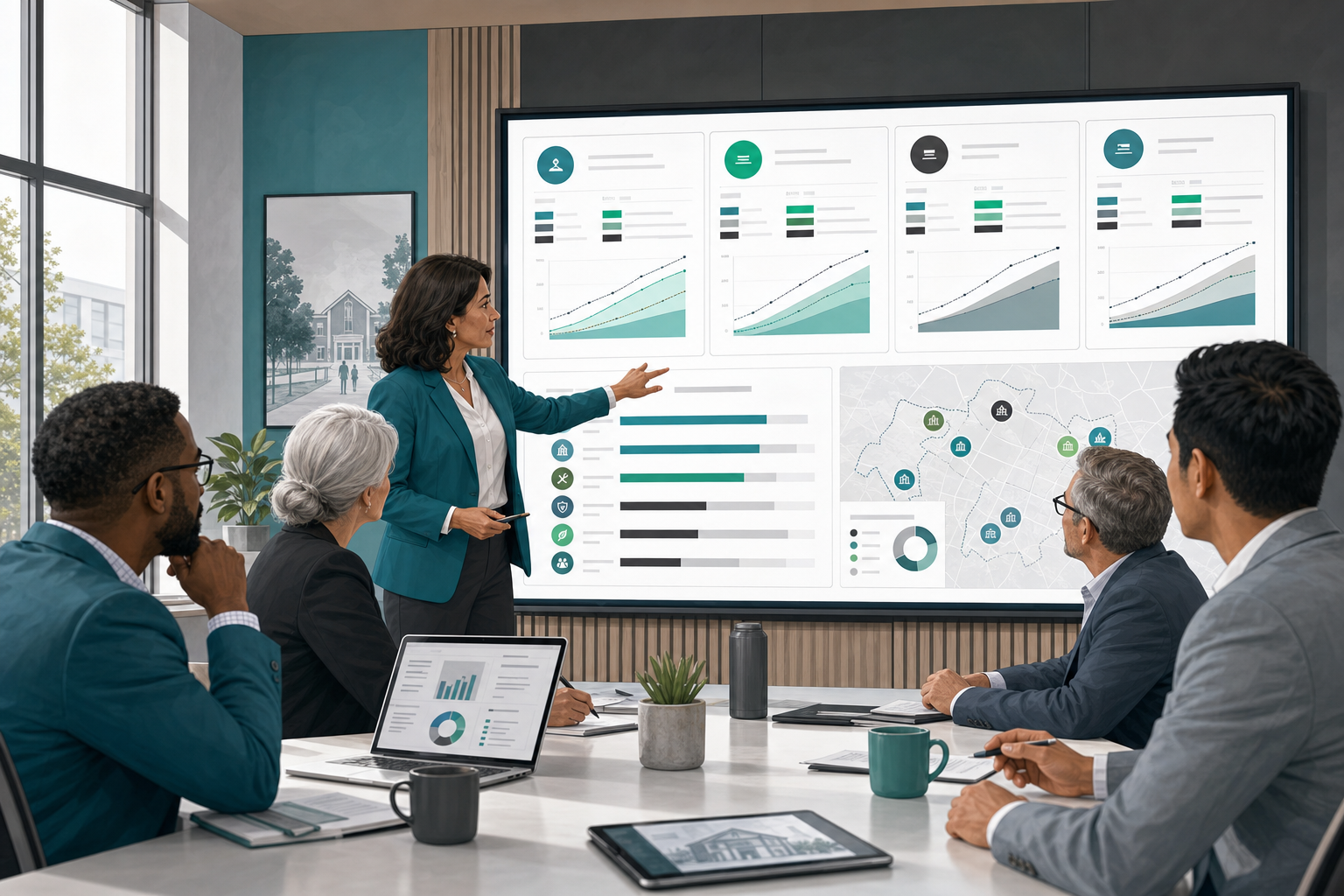
 Where Intellis truly stands out is in its ability to connect your facility condition data directly to capital planning workflows. Instead of exporting numbers to a separate tool, you can score, prioritize, and model funding scenarios in one place. This means you spend less time wrestling with data and more time advocating for the resources your students need.
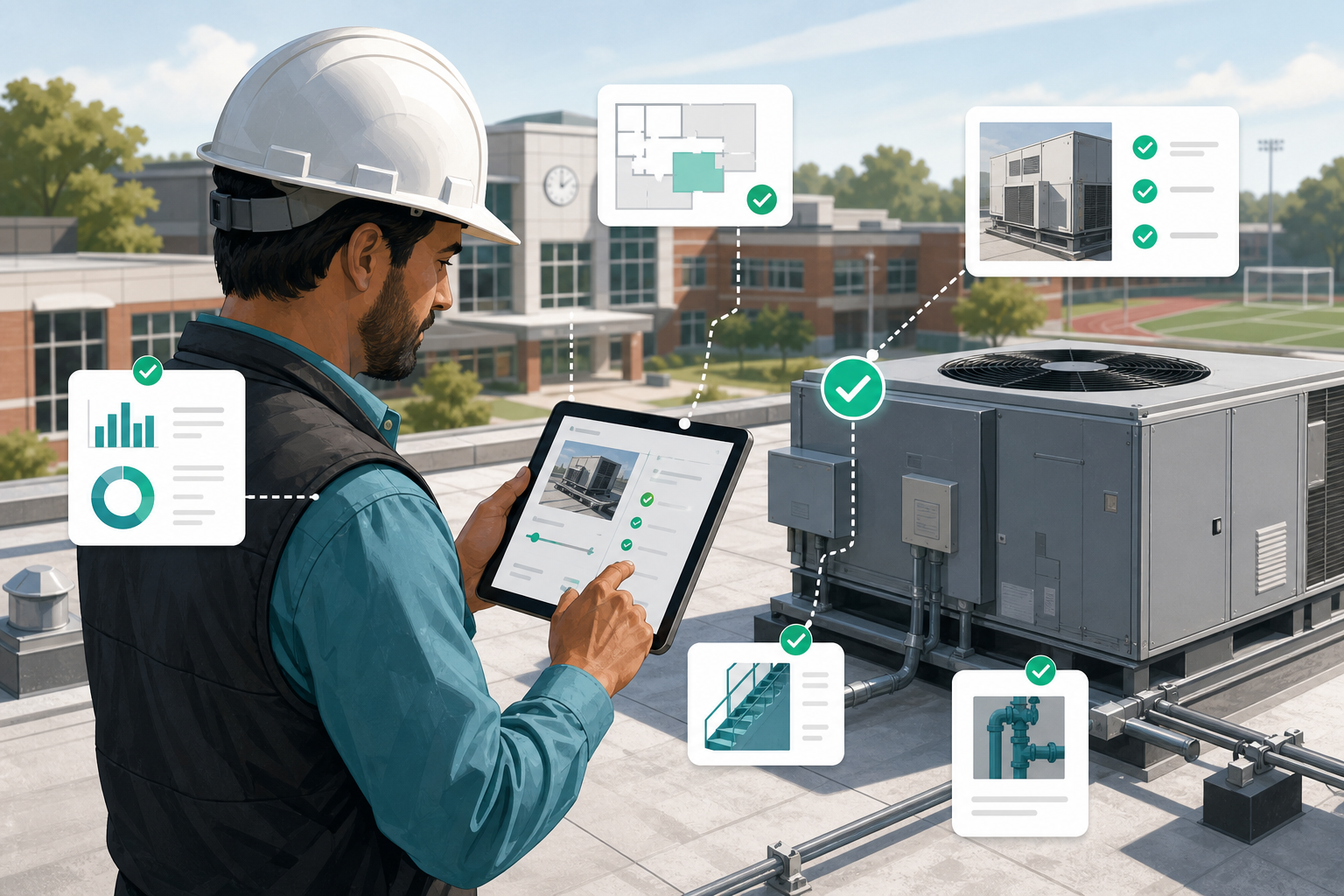
Intellis Foundation also supports mobile-first field collection with offline capabilities, so your inspectors can capture accurate data anywhere on campus. The platform's unified dashboards give you a portfolio-wide view of asset health, helping you spot patterns and allocate resources more effectively.
Intellis Foundation features
-
Facility condition assessment: Standardized data collection via mobile apps that work online or offline, delivering consistent, reliable inspection results across every building.
-
Capital planning and prioritization: Scoring systems and AI-powered insights help you rank projects by safety, compliance, cost, and impact, so you can defend every dollar you request.
-
Scenario modeling: Test different funding levels and timelines to see how they affect your deferred maintenance backlog and long-term asset health.
-
Unified dashboards: Real-time visibility into inspection progress, asset conditions, and capital needs across your entire portfolio, whether you manage 10 buildings or 4,600.
-
Stakeholder reporting: Turn complex facility data into clear reports and visualizations that everyone — from field crews to boardrooms — can understand and act on.
-
Integration capabilities: Connect with your existing financial, HR, and work order systems to keep data flowing without manual re-entry.
How does asset lifecycle data help K-12 districts reduce deferred maintenance?
Deferred maintenance is one of the biggest challenges K-12 facilities directors face. When you don't have clear data on asset conditions, it's hard to know which repairs to fund now and which to wait on. Over time, small problems become expensive failures — think roof leaks that lead to mold or HVAC systems that break down during heat waves.
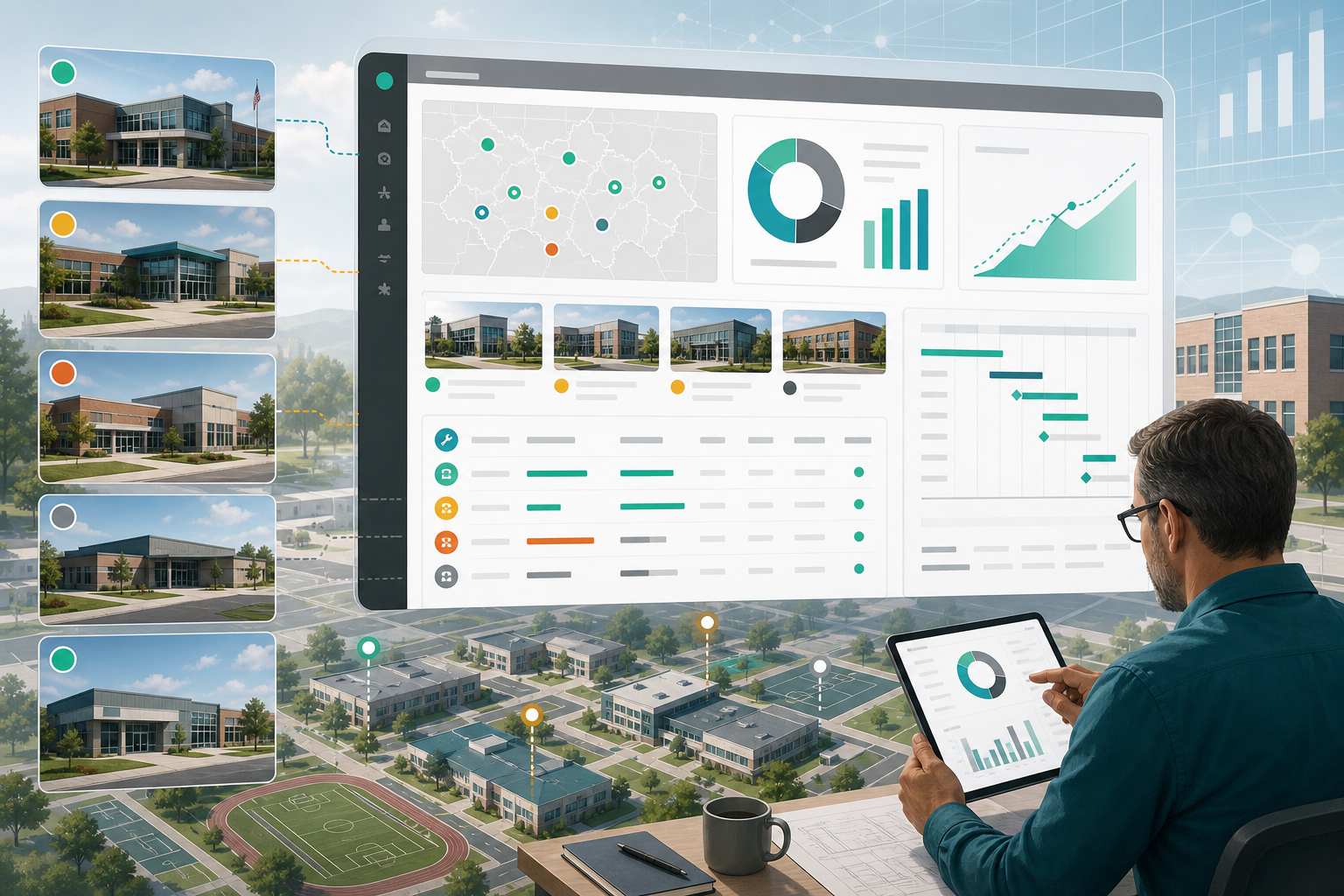
 Asset lifecycle data helps you break this cycle by giving you a clear picture of what needs attention across your entire portfolio. You can see which assets are nearing the end of their useful life, which repairs will cost more if delayed, and where safety or compliance risks are highest.
With this information, you can:
- Prioritize projects based on urgency and impact, not just who asks loudest
- Build multi-year capital plans that account for asset replacement cycles
- Show your board and community exactly where funding is needed — and why
Intellis Foundation helps you connect condition data directly to capital planning, so you can model different funding scenarios and see how they affect your deferred maintenance backlog over time.

What should K-12 facilities leaders look for in capital planning software?
Choosing the right platform starts with understanding your district's goals. Are you primarily focused on reducing deferred maintenance? Preparing for a bond measure? Improving the accuracy of your facility condition assessments?
Here are a few questions to guide your evaluation:
-
Does the platform support your assessment process? Look for mobile data collection, offline capabilities, and standardized scoring so your inspections are consistent.
-
Can you connect condition data to capital planning? The best platforms let you move from assessment to prioritization to funding scenarios without jumping between tools.
-
How does the vendor support K-12 districts? Ask for references from districts similar to yours and look for education-specific documentation and training.
-
What does reporting look like? You'll need to present data to boards, superintendents, and community members—make sure the platform makes this easy.
Intellis Foundation is designed around these needs, with more than two decades of experience helping K-12 districts turn facility data into strategic capital plans.
Free Facility Capital Planning Checklist
7 things facilities leaders should review before building next year's capital budget.
Why Intellis Foundation is the best platform for K-12 capital planning
Intellis Foundation stands apart because its purpose is built for the work K-12 facilities directors do every day. While other platforms focus on maintenance ticketing or workplace scheduling, Intellis connects facility condition assessment data directly to capital planning and prioritization. This means you can move from inspection to funding request without wrestling with exports or separate systems.
 Intellis empowers your team with scenario modeling tools that let you test different funding levels and see how they affect your long-term asset health. When budget season arrives, you're not guessing — you have data-backed plans that show exactly where every dollar should go. This builds confidence with your board, your superintendent, and your community.
With mobile-first field collection, offline capabilities, and unified dashboards, Intellis keeps your data accurate and accessible — whether you manage a handful of schools or thousands of sites.
Ready to see how Intellis Foundation can help your district?
FAQs about asset lifecycle management for K-12 facilities
What is asset lifecycle management for K-12 facilities?
Asset lifecycle management is the process of tracking physical assets—like HVAC systems, roofs, and electrical equipment—from installation through replacement. For K-12 districts, this means knowing the condition, age, and expected lifespan of every asset so you can plan maintenance and capital investments effectively.
Intellis Foundation centralizes this data and connects it to capital planning, so you can prioritize projects based on actual conditions rather than guesswork.
How does Intellis Foundation help with facility condition assessments?
Intellis Foundation includes mobile apps that let your inspectors capture standardized asset data in the field, even without Wi-Fi. The platform scores each asset's condition and aggregates results across your portfolio, giving you a clear view of what needs attention.
This information flows directly into capital planning workflows, so you can prioritize repairs and justify funding requests with defensible data.
Can asset data help K-12 districts secure more funding?
Yes. When you can show your board and community exactly which assets are failing and how delays will increase costs, you make a much stronger case for capital investment. Asset data also supports bond measure campaigns by documenting specific needs and projected timelines.
Intellis Foundation's scenario modeling tools let you test different funding levels and show stakeholders what's possible with various budget scenarios.
How do K-12 districts prioritize capital projects?
Most districts use a combination of factors: safety and compliance risks, asset condition scores, replacement costs, and operational impact. The challenge is pulling all this information together in a way that's transparent and defensible.
Intellis Foundation uses scoring systems and AI-powered insights to help you rank projects by urgency, risk, cost, and impact — so every decision is backed by data, not politics.
What's the difference between CMMS and capital planning software?
A CMMS (computerized maintenance management system) focuses on day-to-day maintenance tasks: work orders, preventive maintenance schedules, and equipment uptime. Capital planning software looks at the bigger picture: which assets need major repairs or replacement, how to prioritize projects across your portfolio, and how to model long-term funding needs.
Intellis Foundation is designed for capital planning and facility condition assessment, helping you move from reactive repairs to strategic investment. Some platforms, like Brightly, offer both CMMS and capital planning modules, though the capital features are often add-ons.

Related Resources
-
Capital Planning — Turn facility condition assessment data into strategic, long-term capital plans with FOUNDATION by Intellis.
-
K-12 Facility Capital Planning Software — See how Intellis helps school districts assess building conditions, prioritize spending, and build smarter long-range capital plans with software designed for K-12 facilities teams.
-
Foundation Condition Assessment + Capital Planning System — Explore how FOUNDATION connects facility condition data directly to capital planning so your team can prioritize projects, improve transparency, and plan years into the future in one unified system.
-
Facility Capital Planning Software — Learn how FOUNDATION supports mobile data capture, AI-driven insights, scenario modeling, and long-term forecasting to help facilities leaders justify funding and make faster, more strategic decisions.
-
Facility Condition Assessment Software — Find out how the CONDITIONS module helps teams standardize inspections, collect field data with or without Wi-Fi, and improve consistency across assessments.
-
PLANS Module for Multi-Year Forecasting — See how the PLANS module helps districts assemble projects into multi-year capital plans, evaluate funding scenarios, and keep stakeholders aligned with plan-level reporting.