

School districts are prioritizing better facility data, stronger investment prioritization, clearer funding justification, and long-range capital plans that reduce risk over time.
What School Districts Are Prioritizing in Capital Planning Right Now
School districts are being asked to do more with aging buildings, tighter budgets, and higher expectations for safety, performance, and accountability.
For facilities and finance leaders, capital planning is no longer just about creating a list of needs. It is about making decisions that can withstand scrutiny, align with district goals, and reduce risk over time.

That shift is happening because district leaders are being asked to make higher-stakes capital decisions with tighter funding, more visible facility challenges, and greater pressure to show how each investment supports safety, performance, and long-term value.
Why are school districts changing how they approach capital planning?
One of the biggest challenges school districts face today is not simply identifying facility needs. It is proving which needs should be addressed first, why they matter, and how limited funding should be allocated.
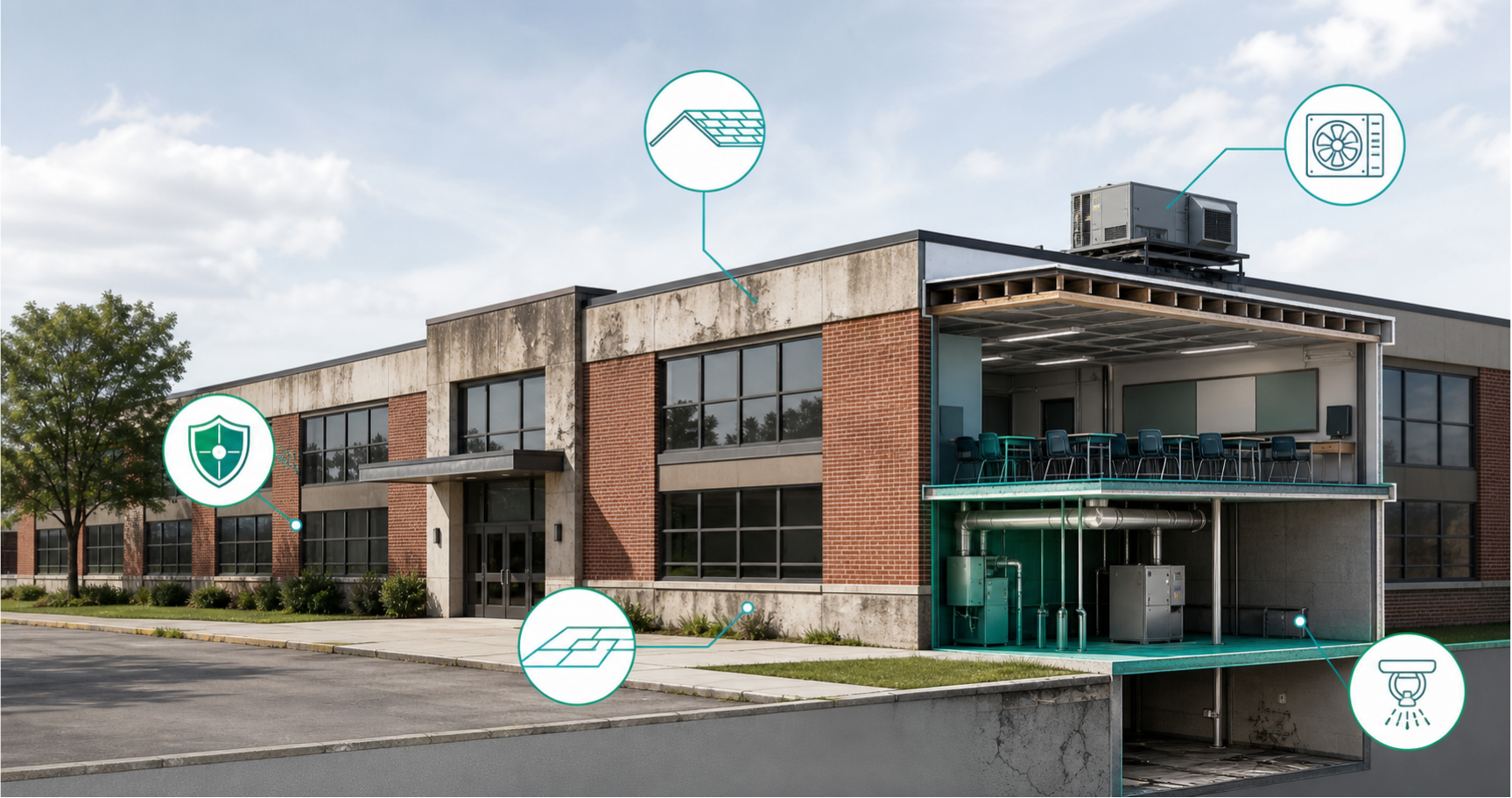
Many districts are managing aging schools, deferred maintenance, and competing project requests across roofs, HVAC systems, interiors, site infrastructure, and life safety components.
At the same time, superintendents, business officials, and boards want stronger justification behind every recommendation.
That creates a familiar challenge: facilities teams know the needs are real, but without current, consistent, decision-ready data, it is difficult to prioritize projects with confidence.
When capital plans are built from incomplete condition data or disconnected reporting, it becomes harder to answer critical questions like:
- Which facility issues create the greatest operational or financial risk?
- What can wait, and what cannot?
- How should the district balance short-term repairs with long-term modernization?
- What investments will have the greatest impact on safety, performance, and asset life?
This is why more districts are shifting their focus from static planning cycles to ongoing, data-driven capital planning.
How do school districts prioritize capital projects?
The most important shift in school district capital planning is this: leaders are moving away from decisions based on urgency alone and toward decisions based on condition, risk, cost, and long-term impact.
In practice, that means districts are increasingly prioritizing:
1. Deferred maintenance visibility
Districts want a clearer understanding of what has been deferred, what that deferral is costing them, and where conditions are likely to worsen if action is delayed.
2. Funding justification
Capital leaders need more than a project list. They need a defensible story that connects facility needs to budget requests, bond planning, and board communication.
3. Investment prioritization
Not every need can be funded at once. Districts are looking for ways to rank capital needs based on urgency, safety, operational impact, and return on investment.
4. Long-range planning
More districts are asking how to build multi-year capital plans that support better forecasting, smoother budgeting, and fewer surprises.
5. Risk reduction
From failing systems to compliance concerns, districts are prioritizing projects that reduce the likelihood of disruption, emergency spending, or visible facility decline.
This is where a strong capital planning process changes the conversation. Instead of asking, "What do we need to fix?" district leaders can ask, "What should we fund first, what risk does it reduce, and how does it support the long-term health of our schools?"
That shift matters because it makes capital planning more strategic, more transparent, and more actionable.

What does defensible capital planning mean for K-12 districts?
If your district is trying to move from fragmented planning to a more defensible capital strategy, the right resource is not just another report. It is a system that helps your team collect accurate facility data, consistently prioritize investments, and build long-term plans with confidence.
To do that well, districts need more than visibility. They need a repeatable system for turning facility condition data into defensible capital decisions.
Foundation by Intellis is built for exactly that purpose.
 How Intellis/Foundation helps school districts:
-
Assess facility conditions with greater consistency
-
Centralize building and asset data in one place
-
Prioritize projects based on urgency, risk, cost, and impact
-
Track deferred maintenance more clearly
-
Model long-term capital needs
-
Support funding conversations with data-backed recommendations
For facilities leaders, that means less time pulling information together and more time making informed decisions. For district leadership, it means clearer visibility into what the district owns, its condition, and where capital dollars should go next.
If your team is asking questions like:
- How do we prioritize capital projects across multiple schools?
- How can we justify our capital budget with better data?
- What are other school districts doing in capital planning right now?
- How do we reduce deferred maintenance without losing sight of long-term goals?
Foundation helps districts answer those questions with centralized data, actionable insights, and a more consistent planning process.

See how Foundation can support your next capital planning cycle
School districts are prioritizing smarter capital planning because the stakes are higher than ever. Aging facilities, constrained budgets, and growing expectations require a planning process that is clear, defensible, and built for long-term decision-making.
If your district is ready to improve how it assesses facility conditions, prioritizes investments, and justifies funding, Foundation by Intellis can help you build a more confident, data-driven capital plan.
See how Foundation by Intellis can help your team take the next step toward a more strategic capital planning process.

FAQ: School District Capital Planning Priorities
School districts are rethinking capital planning to make decisions with better data, clearer priorities, and stronger funding justification. These frequently asked questions cover what district leaders are focusing on right now and how they are building more Defensible Capital Plans.
What are school districts prioritizing in capital planning right now?
School districts are prioritizing better facility data, clearer investment prioritization, stronger funding justification, long-range planning, and risk reduction. The goal is to make capital decisions that are easier to defend, align with district goals, and support the long-term health of school facilities.
Why is capital planning becoming more important for school districts?
Capital planning is becoming increasingly important as many districts manage aging buildings, deferred maintenance, limited budgets, and higher expectations for accountability. Leaders need a more data-driven way to decide what to fund first, what can wait, and how each investment supports safety, performance, and asset life.
How do school districts prioritize capital projects?
Most districts prioritize capital projects by looking at facility condition, risk, cost, urgency, operational impact, and long-term value. Instead of reacting to the loudest need, they are moving toward a more consistent process that ranks projects based on objective criteria and district-wide priorities.
What is deferred maintenance in a school district?
Deferred maintenance is work postponed due to budget constraints, competing priorities, or limited visibility into facility conditions. Over time, deferred maintenance can increase costs, shorten asset life, and create more operational and financial risk for the district.
How can school districts justify capital budgets more effectively?
School districts can justify capital budgets more effectively by connecting facility condition data to project prioritization, funding needs, and long-range planning. When leaders have Centralized Data and clear scoring criteria, they can explain why a project matters now, what risk it reduces, and how it supports district goals.
What makes a capital plan defensible?
A defensible capital plan is based on current facility data, consistent evaluation criteria, and a transparent prioritization process. It helps district leaders show how projects were ranked, how funding decisions were made, and how planned investments support safety, operations, and long-term stewardship.
How does better facility data improve capital planning?
Better facility data improves capital planning by giving districts a more accurate view of building conditions, asset needs, and emerging risks. That leads to stronger prioritization, more reliable forecasting, and more confidence in budget and bond planning conversations.
What should school districts look for in capital planning software?
School districts should look for a system that helps them assess conditions consistently, centralize building and asset information, prioritize projects based on clear criteria, track deferred maintenance, and model long-term capital needs. The right platform should turn complex facility information into Actionable Insights that support faster, more confident decisions.
How does Foundation by Intellis support school district capital planning?
Foundation by Intellis helps school districts collect consistent facility condition data, organize it in one place, prioritize investments, and build more Defensible Capital Plans. That gives facilities and finance leaders clearer visibility into needs, stronger support for funding conversations, and a more strategic approach to long-range planning.
Explore the Foundation platform to see how school districts are using better facility data to prioritize investments, reduce risk, and build more defensible capital plans.

Related Resources
If you are exploring how school districts are improving capital planning with better data, these resources offer additional insight into prioritization, funding justification, and long-range planning:
What District Leaders Need to Build Defensible Capital Plans
A strong follow-up for readers who want to understand what makes a capital plan easier to justify, communicate, and defend.
5 Questions to Ask Before Finalizing a Capital Plan
A practical resource for district leaders who want to pressure-test their capital planning process before final decisions are made.
Transform K-12 Facility Management with Data-Driven Capital Planning
A helpful read for teams looking to connect facility condition data, deferred maintenance, and long-range investment planning in one strategy.
How School Districts Can Connect Data to Decision-Making
A useful companion piece for readers focused on turning facility data into more actionable, defensible capital decisions.