

For many organizations, capital planning is treated as a periodic exercise — something that happens every few years, produces a document, and then quietly drifts out of sync with reality.
At Intellis, we've seen the consequences of that approach.
How We Think About Capital Planning
Facilities don't age on a schedule. Conditions change continuously. Costs fluctuate. Priorities shift. And yet, the plans that guide billions of dollars in decisions are often static, fragmented, and difficult to defend once circumstances change.
.svg) The real challenge in capital planning isn't a lack of data. Most organizations already have more data than they can reasonably interpret. The challenge is turning that data into decisions that remain credible over time.
The real challenge in capital planning isn't a lack of data. Most organizations already have more data than they can reasonably interpret. The challenge is turning that data into decisions that remain credible over time.
Capital planning isn't about predicting the future — it's about making defensible decisions as conditions change.
In our experience, effective capital planning requires three things.
1. Decisions must be traceable
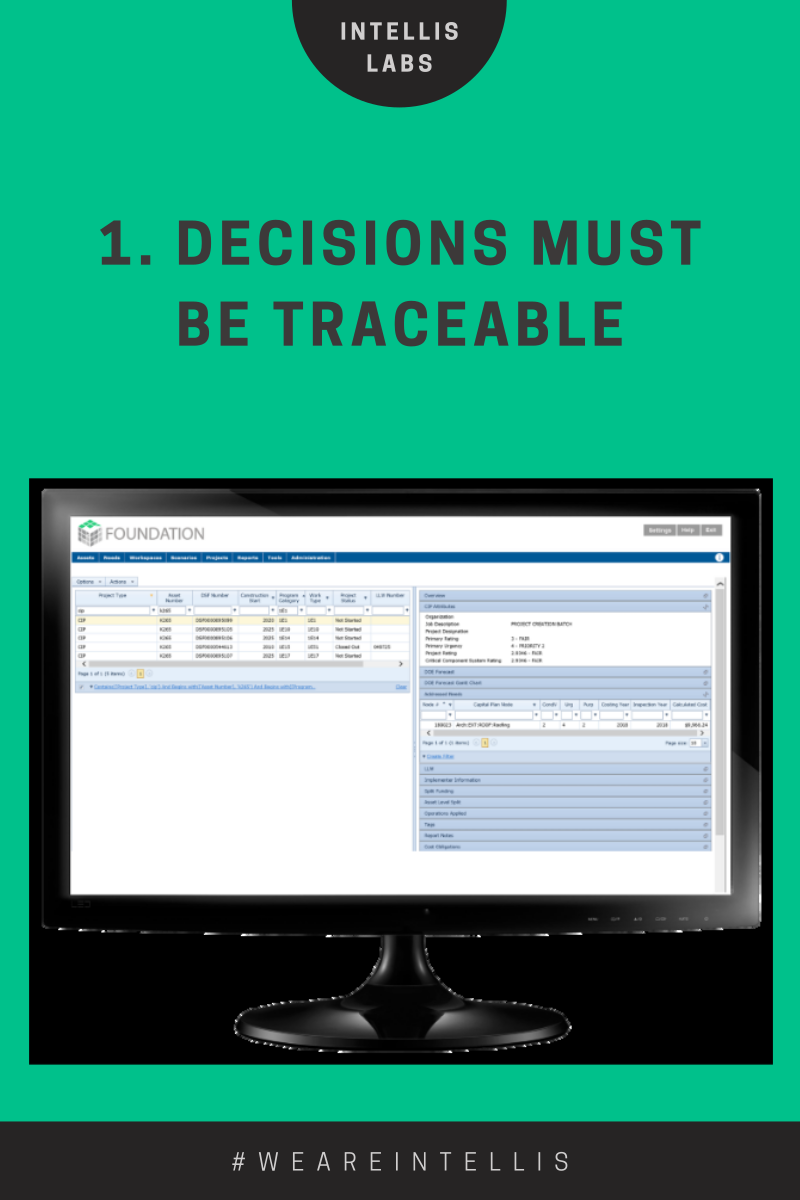
First, decisions must be traceable. When a project is prioritized, there should be a clear, understandable line between the underlying condition data, the planning logic, and the final decision. Without that traceability, plans rely too heavily on intuition, precedent, or persuasion — all of which break down under scrutiny.
Schedule a demo to see AI-powered capital planning in action!
2. Plans must be adaptable
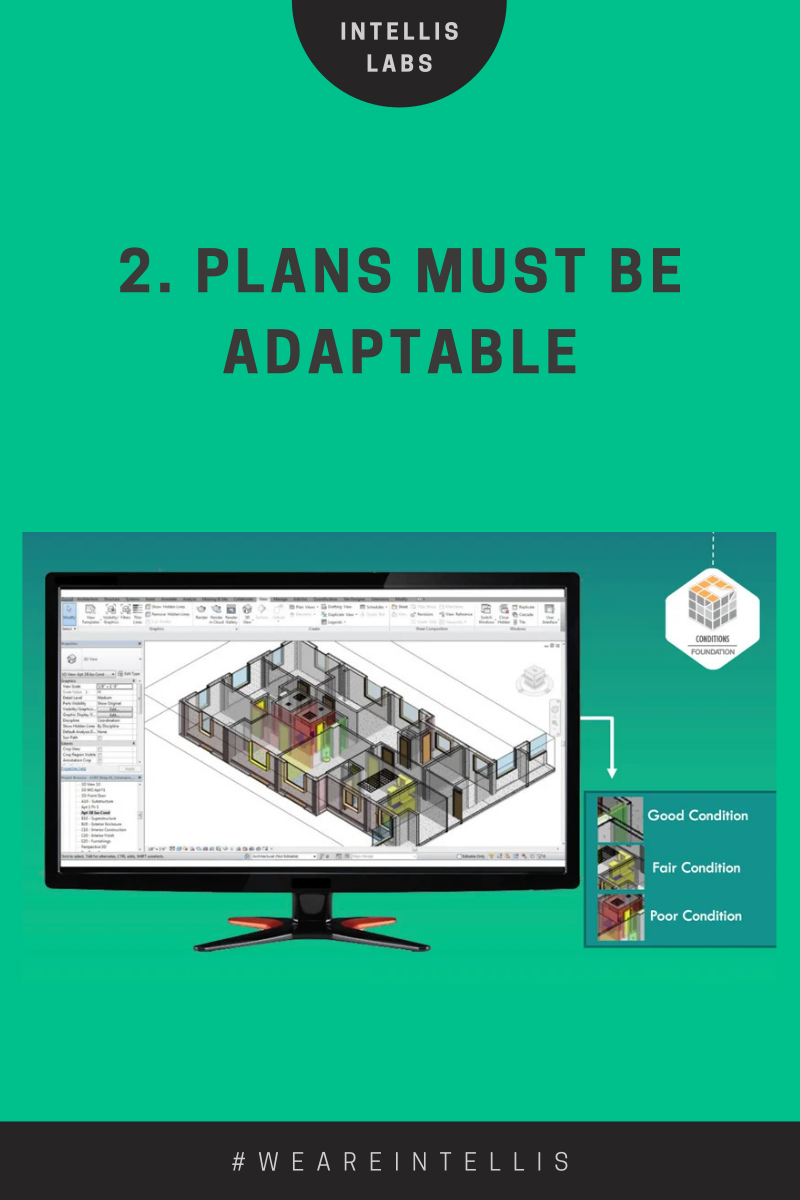
Second, plans must be adaptable. A capital plan should not become obsolete the moment it's approved. Planning needs to be a living process that can absorb new information, test alternatives, and respond to change without starting over. When plans can't evolve, organizations are forced into reactive decision‑making, often at the worst possible time.
 3. Capital planning must support communication
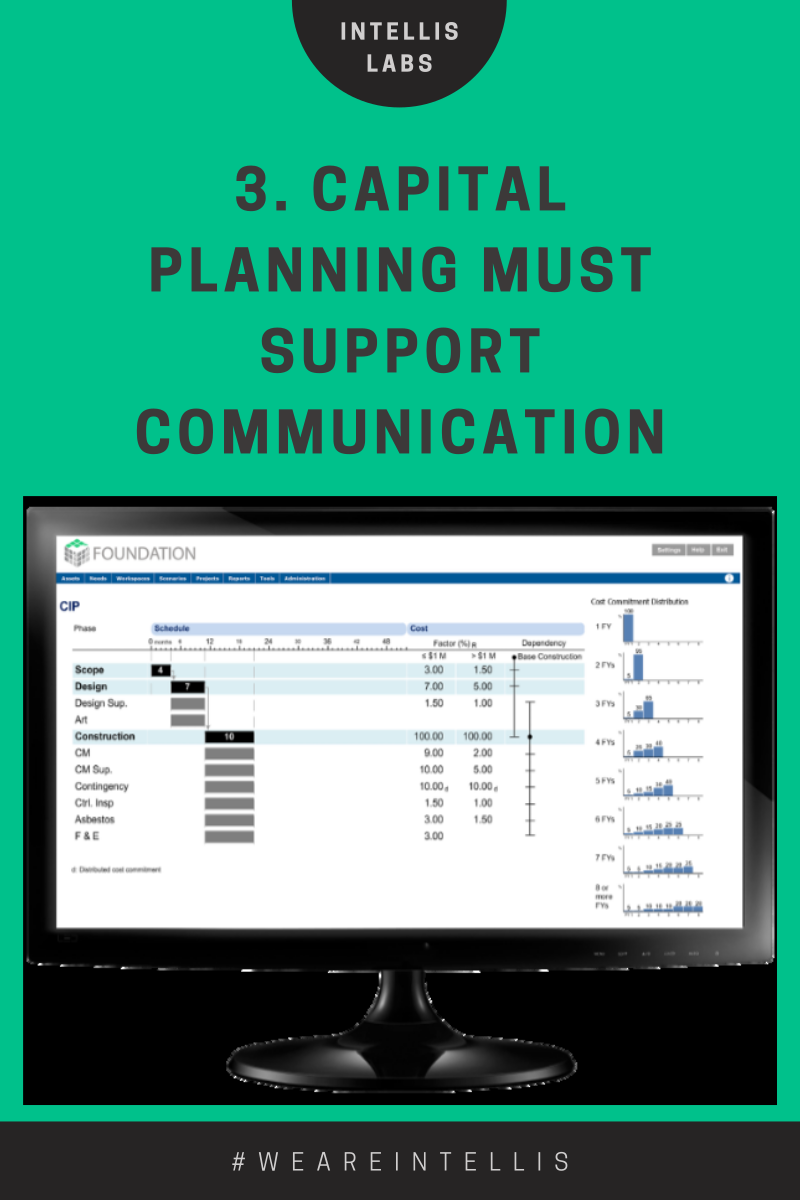
Finally, capital planning must support communication, not just calculation. Facilities leaders are expected to explain complex trade‑offs to executives, boards, finance teams, and stakeholders who don't live in the data every day. A plan that can't be clearly explained won't be trusted — no matter how technically sound it may be.
 This is why we believe capital planning should be treated as a decision framework, not a report.
The goal isn't to produce more analysis. It's to create clarity — clarity about priorities, clarity about trade‑offs, and clarity about why certain decisions make sense now and into the future.
When organizations reach the point where their current tools can no longer provide the clarity they need, they don't need more information. They need a different way of planning.
That's usually the moment when a demo becomes worthwhile — not to look at software, but to evaluate whether a system can truly support better decisions, stronger alignment, and greater confidence in the capital planning process.
 For organizations evaluating whether their current planning tools still serve them, seeing a different approach in action can help clarify what's possible — and whether it's time for a change.
Schedule a demo to see our software in action!

Related Reading
- Facilities Planning and Campus Capital Plans
- Capital budgeting in facilities management
- Infrastructure reliability in capital planning
- Broader asset management strategies for facilities planning
- Capital Plan Management Basics
About Intellis
We help organizations take the guesswork out of capital planning by turning complex facility data into clear, defensible decisions. Our platform, the Foundation System, brings together facility condition assessments, asset data, and long-term capital planning into one intelligent, easy-to-use solution.
Instead of relying on outdated reports or reactive fixes, teams can continuously monitor building conditions, prioritize projects based on real data, and plan years ahead with accuracy. Whether you're managing schools, healthcare facilities, or large portfolios, Intellis empowers you to reduce risk, optimize budgets, and make smarter, faster decisions about your physical assets — all from a single source of truth.