

Asset lifecycle software for schools helps facilities leaders track asset condition, plan capital investments, and justify budget requests with data. For K-12 districts and higher education institutions, the most valuable platforms combine facility condition assessments, offline field inspections, long-range forecasting, and stakeholder reporting into a single system.
Quick guide: asset lifecycle platforms for K-12 facilities leaders
-
Intellis Foundation: The best capital-planning-first platform for school districts
Aging buildings, limited budgets, and growing deferred maintenance backlogs have made this more urgent. According to the National Center on School Infrastructure, the annual funding gap for elementary and secondary public school buildings stands at $85 billion. Without a clear view of which assets need attention, when they need it, and what those will cost, it becomes difficult to defend capital requests or build a long-term plan.
12 Asset Lifecycle Software Features for School Budgeting
More districts are now evaluating asset lifecycle management software to solve that problem. This guide explains the 12 features that matter most when choosing school facilities management software and why a capital-planning-first platform can improve decision-making.

What should school districts look for in asset lifecycle software?
School districts face a different set of challenges than most commercial organizations. Buildings often vary widely in age and condition. Budgets are constrained. Stakeholders expect transparency. Facilities teams need tools that answer practical questions:
- What is the condition of each asset?
- What should be addressed first?
- How do you justify funding requests to boards, finance teams, and voters?
The most useful platforms help districts move from inspection data to defensible capital plans.
Key capabilities include:
-
Facility condition assessment integration: Capture detailed inspection data that rolls up into capital plans, so you can stop relying on outdated reports
-
Offline field data collection: Inspect buildings without Wi-Fi and sync your findings later, because not every boiler room has a signal
-
Capital planning and forecasting: Model different funding scenarios and see how decisions affect your district over 5, 10, or 20 years
-
Asset lifecycle visibility: Track each asset from installation to replacement so you know when costs will hit
-
Scoring and prioritization tools: Rank projects by urgency, risk, safety, and compliance—not by who asks loudest
-
Stakeholder reporting: Generate dashboards and reports that communicate needs clearly to boards, finance offices, and the public
Which asset lifecycle platform is best for school capital planning?
Intellis Foundation: best for capital-planning-first school budgeting
Intellis Foundation is built for organizations that need to connect facility condition data directly to capital planning. For K-12 and higher education facilities leaders, that means fewer gaps between inspection work, prioritization, and budget decisions.

Foundation connects the full facility planning process, from mobile field inspections to long-range capital forecasts. Instead of relying on separate tools for assessments, maintenance, and budgeting, districts can work from a single platform in which condition data supports defensible capital plans.
What makes Intellis different is its focus on what happens after the assessment. Capturing inspection data is only the first step. Facilities leaders also need to prioritize needs, model funding scenarios, and explain tradeoffs clearly. Foundation supports that workflow by helping teams score assets by risk, cost, and impact, then compare funding outcomes under different budget constraints.
Districts using Foundation have reported increasing capital funding by up to 60% and cutting assessment costs in half.
What features does Intellis Foundation include?
Intellis Foundation includes the capabilities school districts need to evaluate facility conditions and turn those insights into long-term plans:
Intellis Foundation features
-
Mobile-first field collection: Capture asset conditions, photos, and notes on tablets or phones—even offline—and sync when you reconnect
-
Facility condition scoring: Assign condition grades based on standardized criteria, so your data speaks the same language across all buildings
-
Scenario modeling: Compare multiple budget scenarios side-by-side to see how different funding levels affect your deferred maintenance backlog
-
AI-powered asset inventory: Speed up data capture with image recognition that helps identify and classify assets in the field
-
Unified dashboards: Give stakeholders real-time visibility into inspection progress, project status, and portfolio-wide metrics
-
Long-term capital forecasting: Project replacement needs and costs over 10, 20, or 30-year horizons to support bond planning and budget requests
How does offline data collection improve school facility inspections?
Offline data collection improves school facility inspections by allowing teams to capture findings anywhere in a building, even without reliable connectivity.
.svg)
That matters because many school buildings include mechanical rooms, basements, rooftops, and other spaces where cellular or Wi-Fi signals are unreliable. If an inspection tool requires a constant connection, teams often lose time, skip areas, or enter notes later.
With offline field collection, inspectors can record photos, condition scores, and notes directly on a tablet or phone and sync the data once they reconnect. This improves both speed and accuracy.
For facilities teams, the benefits are practical:
- Capture findings in real time instead of re-entering notes later
- Reduce missed details during walkthroughs
- Complete inspections in one pass
- Avoid delays caused by connectivity issues in the field
Intellis builds offline capability into Foundation, so field teams can work at their own pace and maintain consistent data collection across every building.
Why do districts need scenario modeling for capital planning?
School districts need scenario modeling because capital decisions rarely depend on a single funding number.

Boards want to know what happens if a district receives full funding versus a partial award. Superintendents need to understand how a bond measure could affect deferred maintenance over time. Finance teams need projections that align with multi-year planning cycles.
Scenario modeling helps facilities leaders answer those questions with data. By adjusting funding levels, timelines, and prioritization criteria, teams can compare outcomes side by side and show the long-term effect of each option.
This supports better communication in several ways:
- Clarifies tradeoffs between funding levels
- Shows how backlog changes over time
- Helps align facilities priorities with district budget cycles
- Strengthens board and voter communication during bond planning
Foundation supports this process by helping district leaders model multiple scenarios and present the results clearly to stakeholders.
Why is Intellis Foundation different from other asset management tools?
Intellis Foundation is different because it was built for capital planning first, not adapted from a maintenance platform.
Many asset management systems began as maintenance software and later added planning features. Intellis took the opposite approach. Foundation was designed from the ground up to help organizations assess conditions, prioritize needs, and build defensible capital plans.
For school districts and higher education institutions, that difference matters. Facilities leaders are not only tracking work. They are also building a funding case that can withstand review by boards, voters, and other public stakeholders.
Foundation connects condition data to budget strategy in a way that supports:
- More objective project prioritization
- Stronger justification for capital requests
- Better long-term planning
- Clearer communication across facilities, finance, and leadership teams
What are the 12 most important asset lifecycle software features for school budgeting?
When evaluating school facilities management software, look for these 12 features:
-
Facility condition assessment integration
Collect detailed inspection data and connect it directly to capital planning.
-
Offline mobile inspections
Capture data in the field without depending on Wi-Fi or cellular service.
-
Asset inventory management
Maintain a clear record of assets, including their locations, ages, and lifecycle status.
-
Condition scoring
Standardize asset assessments so teams use the same evaluation criteria across all buildings.
-
Capital forecasting
Project future replacement needs and costs across multiple planning horizons.
-
Scenario modeling
Compare different funding strategies and understand their long-term impact.
-
Project prioritization tools
Rank needs by urgency, safety, risk, compliance, cost, and operational impact.
-
Deferred maintenance tracking
Monitor backlog trends and identify where delays could create higher future costs.
-
Unified dashboards
Give leadership and facilities teams a shared view of current conditions and priorities.
-
Stakeholder reporting
Create reports that help boards, finance teams, and the public understand facility needs.
-
Photo and note capture in the field
Improve documentation quality during inspections.
-
Long-term planning support
Build multi-year capital plans that align assessment data with budget decisions.
Why does asset lifecycle visibility matter for school budgeting?
Asset lifecycle visibility matters because districts need to know when assets will require repair, renewal, or replacement before those costs become urgent.
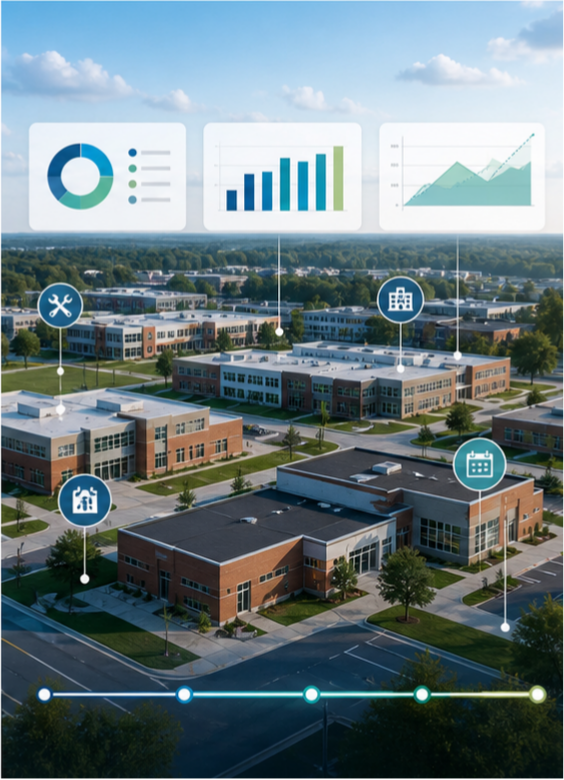 When facilities teams can see where each asset is in its lifecycle, they can plan ahead rather than react late. That makes it easier to estimate funding needs, reduce surprises, and build more stable capital plans over time.
For district leaders, this improves budget conversations because requests are tied to documented need, timing, and projected cost.
How does better reporting help school districts justify capital requests?
Better reporting helps districts justify capital requests by turning facility data into a format that non-technical stakeholders can understand.
Facilities teams may already know which systems are failing or where the biggest risks exist. The challenge is explaining those needs clearly to boards, finance leaders, and voters. Dashboards and structured reports help connect asset condition, project urgency, and financial impact in a way that supports decision-making.
That is especially important when districts need to show why one building, system, or project should be funded before another.
Why Intellis Foundation is a strong fit for school budgeting
For K-12 and higher education facilities leaders, the goal is not simply to document building conditions. The goal is to use that data to make better capital decisions, communicate tradeoffs clearly, and justify investment with confidence.
Intellis Foundation supports that process by integrating field inspections, condition scoring, prioritization, and long-range forecasting into a single platform. If your district needs a clearer path from facility data to defensible capital plans, Foundation offers a capital-planning-first approach designed for that work.
If you are evaluating asset lifecycle software for your district, Intellis Foundation is worth considering for teams that need more than maintenance tracking and want a system built to support data-driven school budgeting.
Schedule a demo with Intellis to see how Foundation supports data-driven school budgeting.

FAQs about asset lifecycle software features for school budgeting
What is asset lifecycle management software for schools?
Asset lifecycle management software tracks school facilities and equipment from installation through replacement. Intellis Foundation connects this tracking to capital planning, so you can forecast when assets will need attention and budget accordingly.
Why do school districts need offline inspection capabilities?
Many school buildings have areas without reliable connectivity — such as mechanical rooms, basements, and rooftops. Offline capabilities let your inspectors capture data anywhere and sync later, improving accuracy and reducing rework.
How does scenario modeling help with school capital planning?
Scenario modeling lets you compare different funding levels and see their impact over time. Intellis Foundation allows you to model multiple budget scenarios side by side, helping you communicate tradeoffs to boards and finance teams.
What features should I look for in school facilities management software?
Focus on facility condition assessment integration, offline data collection, capital forecasting, prioritization scoring, and stakeholder reporting. These features help you move from scattered data to defensible capital plans.
How does Intellis help districts justify capital budget requests?
Intellis Foundation connects inspection data to long-term capital forecasts, creating reports that show exactly what your facilities need and when. This data-backed approach provides evidence to defend funding requests to boards and voters.
What is the difference between maintenance software and capital planning software?
Maintenance software is typically designed to manage work orders and ongoing service tasks. Capital planning software is designed to help organizations assess asset condition, forecast future needs, prioritize projects, and plan long-term investments.
Why is facility condition data important for school budgeting?
Facility condition data is important because it shows what assets need attention, how urgent those needs are, and what they may cost over time. That information supports more accurate and defensible budget planning.
Can asset lifecycle software help with bond planning?
Yes. Asset lifecycle software can support bond planning by showing how proposed funding would address facility needs over time. Scenario modeling and long-term forecasting make it easier to explain project impact, building by building and system by system.

Related Reading
If you're exploring how school districts can turn facility data into clearer, more defensible capital plans, these resources are a strong next step:
-
Why Capital Plans Fail in Large School Districts — and How Foundation Supports Defensible Capital Planning — A closer look at why capital plans break down and what it takes to build a planning process leaders can explain with confidence.
-
5 Questions to Ask Before Finalizing a Capital Plan —A practical framework for evaluating data quality, prioritization logic, long-term planning, and budget justification before final decisions are made.
-
The Smarter Way for Urban School Districts to Manage Facilities, Assets, and Capital Planning — Useful for teams looking at how asset management, lifecycle visibility, and capital planning work better when connected in one system.
-
How Data-Driven Capital Planning Transforms K-12 Facilities — A strong companion piece on scenario modeling, continuous assessment, and how districts move from project lists to long-term strategy.
-
Industry Insights: Capital Budgeting for K12 Facilities Managers — A foundational read for education leaders who want a broader overview of capital budgeting and planning principles in K-12 environments.