

Large school districts do not struggle with capital planning because they lack data. They struggle because turning facility condition data, cost assumptions, and district priorities into decisions leaders can defend is far more difficult than collecting the information in the first place.
Under budget pressure, public scrutiny, and competing operational needs, even well-informed plans can break down when the logic behind prioritization is hard to explain.
Assess with clarity. Prioritize with confidence. Plan for what’s next.
Book a 20-minute planning conversation to identify where your current assessment and capital planning process can become more connected, visible, and actionable.

Districts are expected to prioritize needs across aging buildings, limited funding, compliance pressures, and public accountability — all while explaining why one investment matters more than another. The challenge is not a lack of information. It is the difficulty of turning assessments, cost data, and district priorities into decisions that boards, communities, and executive teams can understand and support.

That is where a more strategic planning approach matters. Foundation helps large urban school districts turn facility condition data into defensible prioritization, scenario planning, and executive-ready communication, so capital planning becomes a clear, supportable strategy rather than a document teams are forced to defend after the fact.
Why Capital Plans Fail in Large School Districts
(And How Foundation Supports Defensible Capital Planning)
Foundation is a facility capital planning platform for large urban school districts that helps leaders turn condition data into defensible investment strategy.
See how districts turn facility data into defensible capital decisions
Foundation helps large school districts connect facility condition data to prioritization, scenario planning, and executive-ready communication. See how your team can move from fragmented planning inputs to a capital strategy leaders can defend.

Most capital plans don't fail because districts lack data, expertise, or effort. They fail because they're too hard to defend.
In large school districts — especially urban systems managing hundreds of facilities — capital planning happens under intense scrutiny. Budgets tighten. Boards ask why one project outranks another. Communities want transparency. Leaders are asked to explain decisions backed by documents that haven't changed since they were published.
When a plan can't withstand those questions, confidence erodes — and the plan collapses under pressure. This is not a planning problem. It's a strategy problem.
Why do capital plans fail in large school districts?
Capital plans often fail not because districts lack facility data, but because they lack a clear way to turn that data into defensible decisions. In large urban districts, leaders must prioritize needs across aging buildings, limited funding, compliance requirements, and community expectations. When condition data, cost data, and district priorities are not connected through a consistent planning methodology, it becomes difficult to explain why one investment matters more than another.

The reality in large districts: complexity is the norm
Large school districts operate at a scale where traditional planning approaches break down:
- Aging, diverse building portfolios
- Limited and uncertain funding
- Competing priorities across safety, capacity, equity, and compliance
- Pressure to justify decisions publicly and repeatedly
Most districts already have facility condition assessments, cost estimates, spreadsheets, and reports. The challenge isn't information. The challenge is converting that information into clear, defensible decisions that leadership can explain — and stand behind.
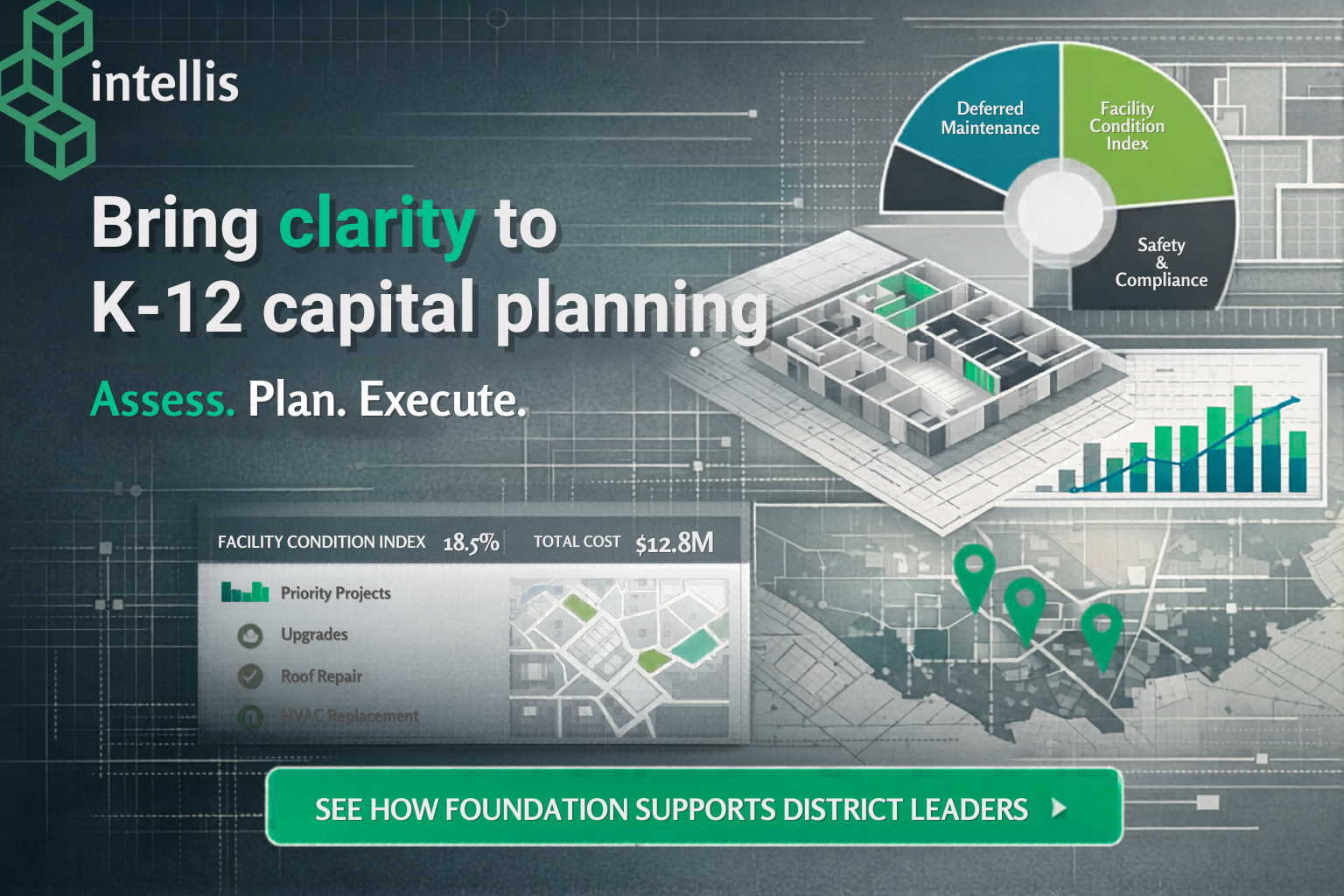
Bring clarity to capital planning decisions
When priorities are difficult to explain, even strong plans lose support. See how Foundation helps districts standardize facility data, evaluate funding scenarios, and communicate capital priorities with greater confidence.

Where capital plans break down
Across districts, the same failure points appear again and again.
1. Plans Are Static While Reality Is Not
Capital plans are often treated as fixed documents. Facilities don't behave that way.
Conditions change. Costs shift. Projects move. When plans can't adapt, teams spend more time explaining why the plan no longer reflects reality than using it to guide decisions.
A plan that can't evolve becomes obsolete long before it's complete.
2. Data Exists — but Isn't Connected to Strategy
Many districts have strong assessments that live in PDFs, spreadsheets, or disconnected systems.
What's missing is a consistent decision framework:
- Why does one project rise above another?
- How does condition data connect to risk, impact, and outcomes?
- What happens if funding assumptions change?
Without that logic, prioritization becomes subjective. When decisions are challenged, teams fall back on intuition or precedent — neither of which holds up in high‑stakes budget conversations.
3. Priorities Are Hard to Explain to Stakeholders
A capital plan that can't be clearly explained won't survive contact with boards, finance teams, or the public.
Leaders aren't just asked what they're funding — they're asked why:
- Why this school now?
- Why defer that system?
- Why this level of investment?
If the plan doesn't tell a clear, visual, data‑backed story, confidence erodes quickly.
What defensible capital planning actually looks like
Districts that succeed don't create "better reports." They build living planning systems.
Defensible capital plans share three core characteristics:
1. Decisions Are Traceable
Every priority can be traced back to objective inputs — condition, risk, cost, impact — using a consistent methodology.
When challenged, teams can show their work.
2. Plans Adapt as Conditions Change
Instead of static spreadsheets, plans update as data changes:
- New assessments
- Updated project schedules
- Shifting financial assumptions
Scenario modeling allows leaders to evaluate trade‑offs in real time — before decisions are locked in.
3. Leadership Can Communicate With Confidence
The best plans don't just guide internal teams — they support external conversations.
Clear visuals, straightforward prioritization logic, and outcome‑driven narratives allow leaders to explain decisions to boards, communities, and funding partners without defensiveness.
Make capital planning easier to defend
Foundation gives district leaders a clearer way to connect condition, cost, risk, and impact within a single planning workflow. Explore how your team can prioritize investments more consistently and confidently support executive conversations.

How Foundation supports defensible capital planning
Foundation helps large school districts turn facility condition data into a planning process leaders can explain with confidence. Instead of treating assessments, prioritization, and communication as separate tasks, it connects them within a single system built for capital planning.
This is where Foundation is fundamentally different from traditional planning tools. Foundation is not another assessment repository or reporting layer. It is the system that connects facility data to strategy.
With Foundation, districts can:
- centralize and standardize facility condition data across the portfolio
- apply consistent prioritization logic to capital decisions
- model funding and timing scenarios before plans are finalized
- produce clear, executive-ready outputs for boards and leadership teams
The result is not just a better planning workflow. It is a more defensible capital strategy that can adapt as conditions, priorities, and funding assumptions change.
Instead of defending a static document, leaders operate a living, defensible capital strategy.
Who Foundation is for — and why districts use it
Foundation is built for large school districts that need to connect facility condition data to capital planning strategy.
Districts use Foundation when they need to:
- standardize facility condition data across a large portfolio
- prioritize capital investments using consistent, defensible criteria
- model funding scenarios before decisions are finalized
- connect condition, risk, cost, and impact in one planning workflow
- give executives and boards clear, decision-ready outputs
- explain capital priorities with greater transparency and confidence
Foundation helps facilities leaders, finance teams, and executive stakeholders move from fragmented planning inputs to a capital strategy they can defend.
From capital plan to capital strategy
The districts making progress today share a mindset shift: They don't ask, "Do we have a capital plan?" They ask, "Can we defend our capital decisions?"
Plans that survive scrutiny are not built once every five years. They are actively managed, continuously informed by data, and clearly aligned to outcomes.
That is the difference between planning and leading.
Let's Compare Notes
If you're re‑examining how your district makes and defends capital decisions, we're always open to comparing approaches and sharing what we're seeing across large districts.
Because the strongest capital plans don't just allocate dollars.
They earn trust.

Related Reading
If you're exploring how districts turn facility data into defensible capital decisions, these articles offer a useful next step: