

Facility teams today have more data than ever before: Facility Condition Assessments (FCAs). Asset inventories. Cost estimates. Useful life projections. Spreadsheets stacked on spreadsheets.
And yet, capital planning is still one of the hardest decisions organizations make. Budgets get questioned. Priorities get challenged. Plans get reworked year after year.
So what's going wrong?
The short answer: data alone doesn't create clarity.
Capital planning fails when data isn't connected to decision-making.
This article explains why facility data by itself isn't enough — and what organizations need instead.
Why Isn't Facility Data Enough for Capital Planning?
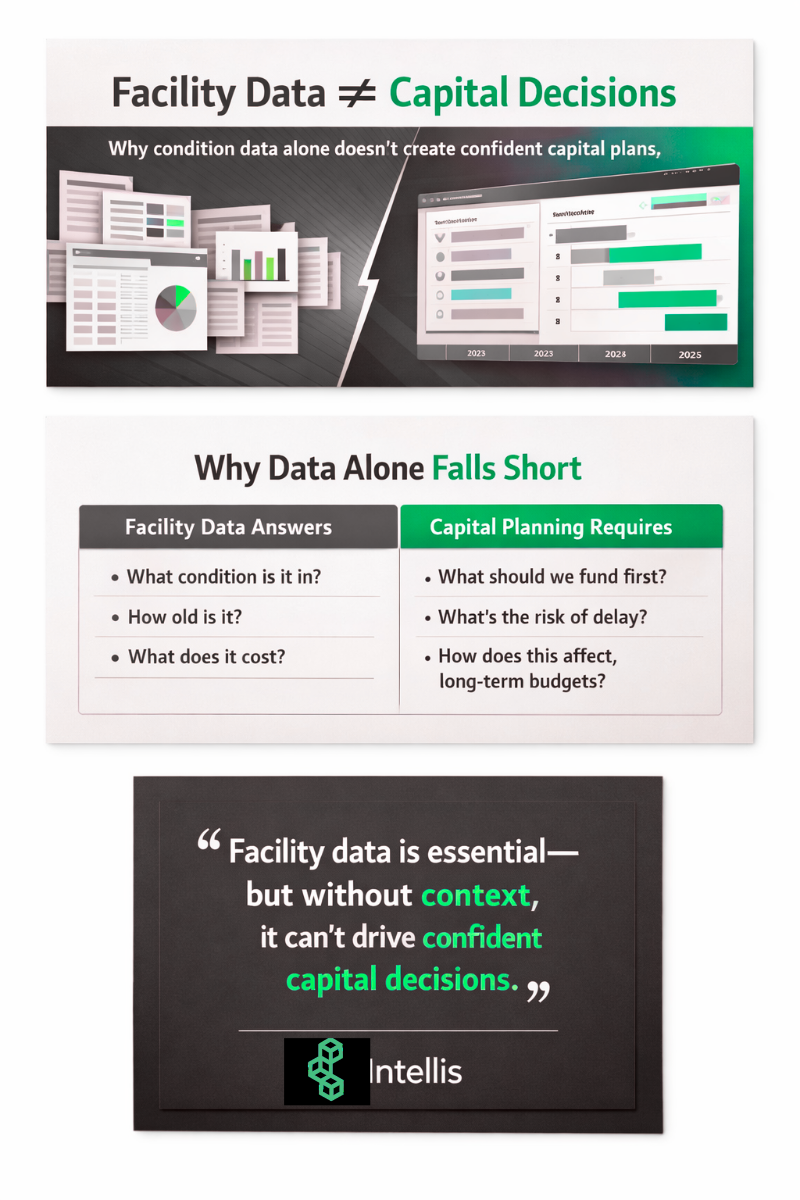
Facility data alone isn't enough for capital planning because it doesn't provide prioritization logic, financial context, or long-term planning insight.
Without a system that connects condition data to capital needs, funding scenarios, and risk, organizations struggle to justify decisions or plan with confidence.
What Is Facility Data?
Facility data typically includes:
- Facility Condition Assessment scores
- Asset inventories and attributes
- Deferred maintenance backlogs
- Replacement costs and remaining useful life
- Inspection notes and photos
This information is essential — but it's only raw input, not a plan.
The Common Misconception: "If We Have Good Data, Planning Will Be Easy"
Many organizations assume that once they complete an FCA, capital planning will naturally follow.
In reality, this is where planning often breaks down. Why?
Because FCA data usually lives:
- In static reports
- In spreadsheets that age quickly
- In disconnected systems
- Without a clear link to funding decisions
The result: lots of information, very little alignment.
The Real Problem: Data Without Decision Context
Facility data answers questions like:
- What condition is this asset in?
- How old is it?
- What might it cost to replace?
But capital planning requires answers to different questions:
- What should we fund first?
- What happens if we delay this project?
- How does this decision affect the next 5, 10, or 20 years?
- How do we explain this plan to leadership or a board?
Without context, data can't answer those questions.
Why Spreadsheets and Static Reports Fall Short
Spreadsheets are often the default tool for capital planning — but they weren't designed for it.
They struggle to:
- Handle changing assumptions
- Support scenario modeling
- Maintain consistent prioritization logic
- Update plans as conditions or funding change
- Provide transparency to stakeholders
Most importantly, they can't scale decision-making across large portfolios.
Capital Planning Requires More Than Condition Scores
A condition score alone doesn't determine priority.
Effective capital planning must consider:
- Risk to operations or safety
- Impact of failure
- Regulatory or compliance concerns
- Timing and coordination with other projects
- Funding availability and constraints
When these factors aren't connected to facility data, prioritization becomes subjective—and hard to defend.
What Actually Turns Facility Data Into a Capital Plan?
To support real decision-making, organizations need a system that:
1. Translates condition data into defined needs
2. Groups needs into fundable projects
3. Applies consistent prioritization logic
4. Models funding scenarios over time
5. Produces clear, defensible outputs for leadership
This is the difference between having data and having a plan.
The Cost of Not Connecting Data to Decisions
When facility data isn't connected to capital planning:
- Funding approvals take longer
- Capital plans lose credibility
- Teams remain reactive
- Leadership confidence erodes
- Deferred maintenance continues to grow
In other words, the data exists — but its value is never fully realized.
The Shift Organizations Are Making
Leading organizations are moving away from:
- One-time FCA reports
- Spreadsheet-driven capital plans
- Static, outdated projections
And toward:
- Integrated planning platforms
- Living capital plans that update over time
- Transparent prioritization frameworks
- Clear links between condition, risk, and funding
This shift changes how capital conversations happen—and how decisions get approved.
Want to see how organizations connect facility data to real capital decisions?
Explore how modern capital planning systems are changing the process.

Frequently Asked Questions
What is the biggest limitation of facility condition data?
Facility condition data shows asset health, but it does not provide prioritization, funding strategy, or long-term planning insight on its own.
Can FCA data be used for long-term capital planning?
Yes—but only when it is connected to a system that translates condition data into needs, projects, and multi-year capital plans.
Why do capital plans become outdated so quickly?
Most capital plans are built as static documents that cannot adapt to changing conditions, funding levels, or organizational priorities.
What should a modern capital planning system do?
It should connect facility data to prioritization logic, funding scenarios, and long-term forecasting within a single integrated platform.
What Comes Next
Facility data is essential — but it's only the starting point.
Smarter Facilities Planning with Intellis
The next challenge is moving from reactive maintenance to defensible, data-backed capital plans that leadership can trust.
Up next in this series: From Reactive Maintenance to Defensible Capital Plans
Additional Resources
Coming Soon
- How to prioritize capital projects using condition data
- How to plan capital improvements using facility data
- How do you plan capital improvements using facility data?